Low Water Pressure in the Shower: How to Find the Cause and Fix It
Low, weak or suddenly decreased water pressure in the shower comes from a short list of causes, and you can rule most of them out without tools. This guide goes in order: first whether the whole house is affected, then whether only the hot side is weak, then the showerhead, the valve and the pipe behind the wall. Each step is drawn from manufacturer instructions, the plumbing code or water utility guidance, listed under Sources at the end.
Is It the Whole House or Only the Shower?
Run hot and cold water at the kitchen sink, a bathroom sink and the tub spout. Ogden City's water utility puts it simply: if low pressure affects a single fixture, look at that fixture; if it affects the entire property, check the main shutoff valve to make sure it is fully open.
If every faucet is weak, the shower is not the problem. Check that the main shutoff is fully open. If your home has a pressure reducing valve (PRV), usually where the main water supply comes into the house, it may be the cause: Marana Water notes that a non-functioning PRV can reduce the pressure inside your home and recommends having a licensed plumber install one. For a whole-house drop, our sister site Vent, Valve & Volt has a low water pressure troubleshooter that starts with how much of the house is affected.
A plumber can put a gauge on the system. The International Residential Code limits static water pressure in a home to 80 psi and calls for a pressure reducing valve where the street pressure runs higher, so a PRV is common in areas with high supply pressure.
If only the shower is weak, keep going.
Low Hot Water Pressure in the Shower? Check Hot vs Cold
Turn the shower to full cold, then full hot, and compare. Then run the hot water at a sink.
- Hot is weak at every faucet: look at the water heater side. Blaine, Minnesota's utility notes that sediment in a water heater tank can clog water lines, and Howard County, Maryland traced one wave of low pressure complaints to water heater dip tubes breaking apart and clogging faucet screens. Water heater service is a job for the heater's instructions or a plumber.
- Hot or cold is weak only at the shower: the valve is the suspect. Moen's troubleshooting for its pressure balancing shower valve lists low flow on the hot or cold side with replacing the cartridge as the fix (Step 6).
If the pressure is fine but the water will not get fully hot, especially in winter, see why a shower is not getting hot enough in winter.
Clean the Showerhead
Hard water leaves mineral buildup on the spray face and chokes the nozzles. Manufacturers recommend white vinegar:
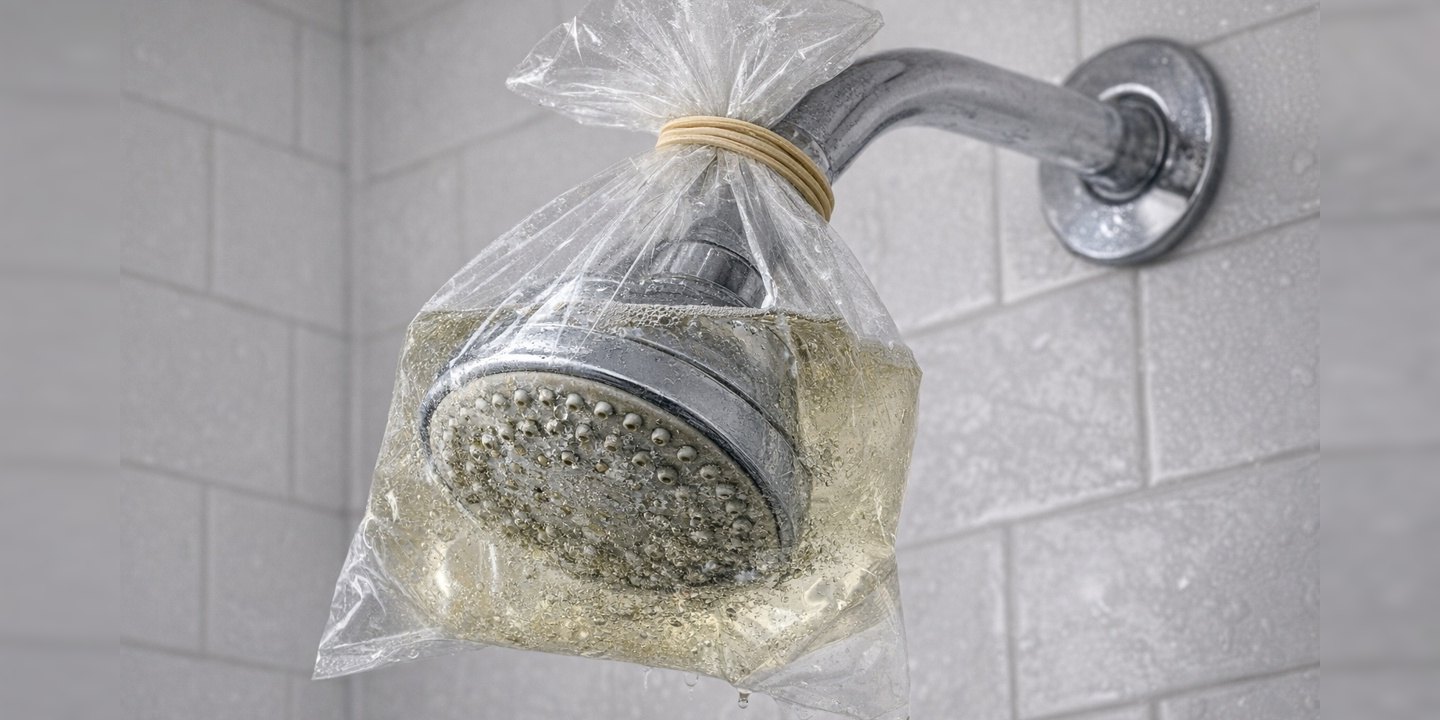
- Bag method: pour white vinegar into a plastic bag, tie it around the showerhead so the face sits in the vinegar, and leave it to soak.
- Container method: take the head off and soak it in a container of vinegar and water, as Delta describes.
Soak times vary by maker, from 30 minutes to overnight, so follow the care instructions for your showerhead. Then gently rub the spray face with a soft cloth or toothbrush, rinse, reinstall and test.
Clean the Inlet Screen, Leave the Flow Control In
Unscrew the showerhead and look inside the inlet. Delta explains that a gasket and screen sit inside the nut to keep debris out of the head; when that screen catches grit, flow drops. Kohler's instructions say to pry up the screen washer with a thin bladed screwdriver, clean it and put it back.
Behind the screen is the flow control. Kohler's instructions say not to try to remove it. Federal rules limit showerheads to 2.5 gallons per minute at 80 psi and require the flow restricting insert to be retained in the head at manufacture, and EPA WaterSense heads use no more than 2.0 gallons per minute. Clean the screen; do not drill out or pull the flow control.
Make Sure the Valve Stops Are Fully Open
Many single-handle shower valves have built-in stops, small shutoffs on the hot and cold inlets behind the trim. If they were turned down during an install or a repair, the shower runs weak. Moen's troubleshooting says that if a shower with no flow was recently installed or serviced, confirm the check stops are fully open. Kohler asks the same for Rite-Temp valves, and Delta's valve instructions say to set the stops to full open.
Take off the handle and trim to see them. On a Moen Posi-Temp valve the stop is open when its slot is horizontal and closed when it is vertical. On Delta valves with stops, a flat screwdriver turns the stem counterclockwise to open.
Clean or Replace the Shower Cartridge
If the head and screen are clean and the stops are open, the cartridge is next. Moen's low flow troubleshooting for its M-Core valve calls the cartridge the most common reason for low flow in a shower. Moen's fix for its Posi-Temp valve is to replace the 1222 cartridge.
Signs it is the cartridge: the weak flow is only at this shower, it shows on the hot or cold side, or it came back after the head was cleaned.
Before you start, shut off the water to the valve, as Moen's instructions require, then open the handle to drain the water left in the valve. With the old cartridge out, Moen recommends cleaning and flushing the valve body before the new cartridge goes in. Not sure which cartridge you have? Use the cartridge identification guide, and see 5 signs your shower cartridge needs replacing.
FourHome makes replacement pressure balance cartridges for these six valves:
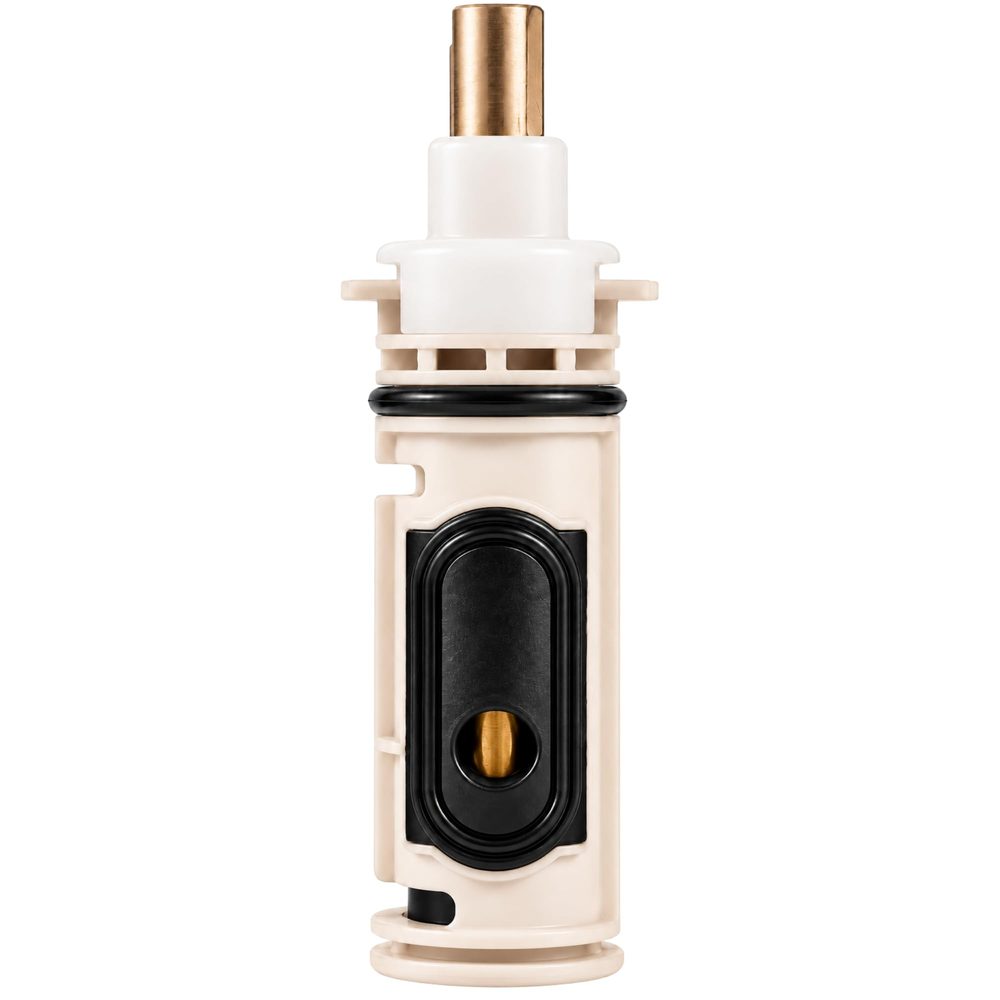
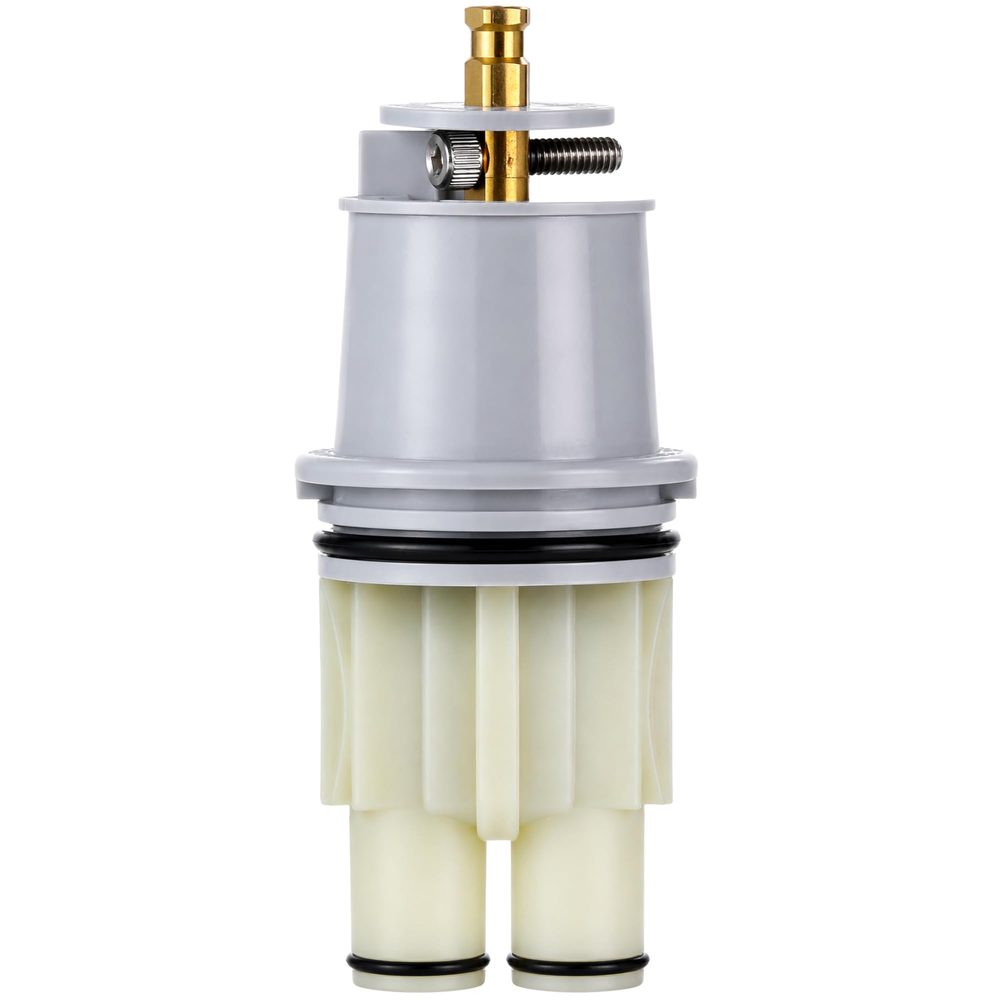
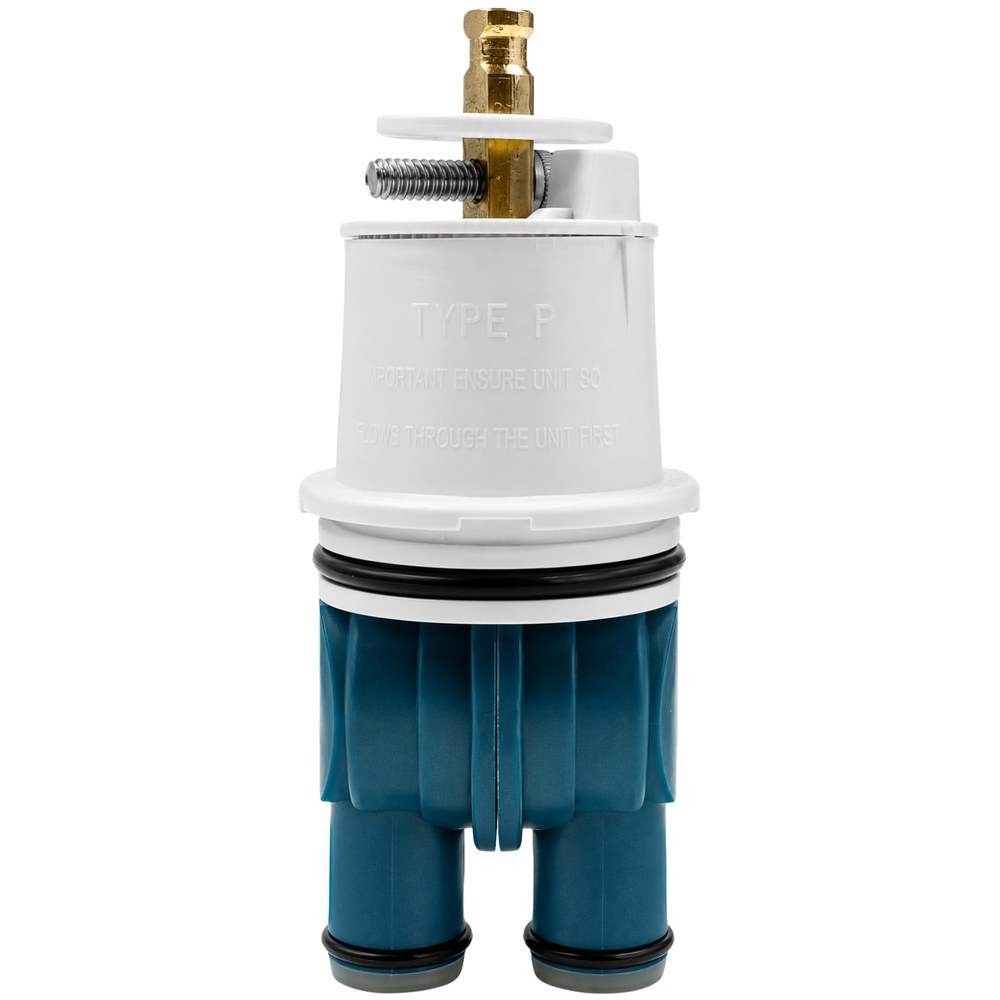
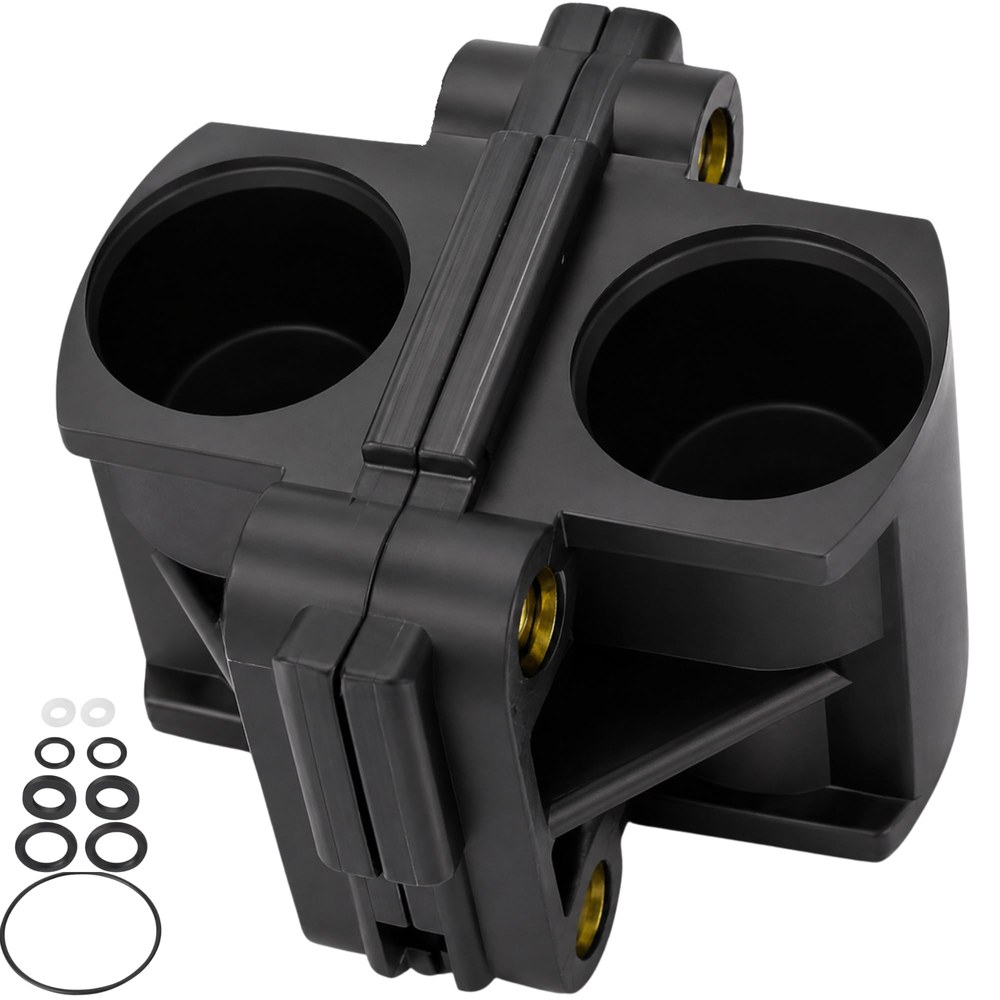
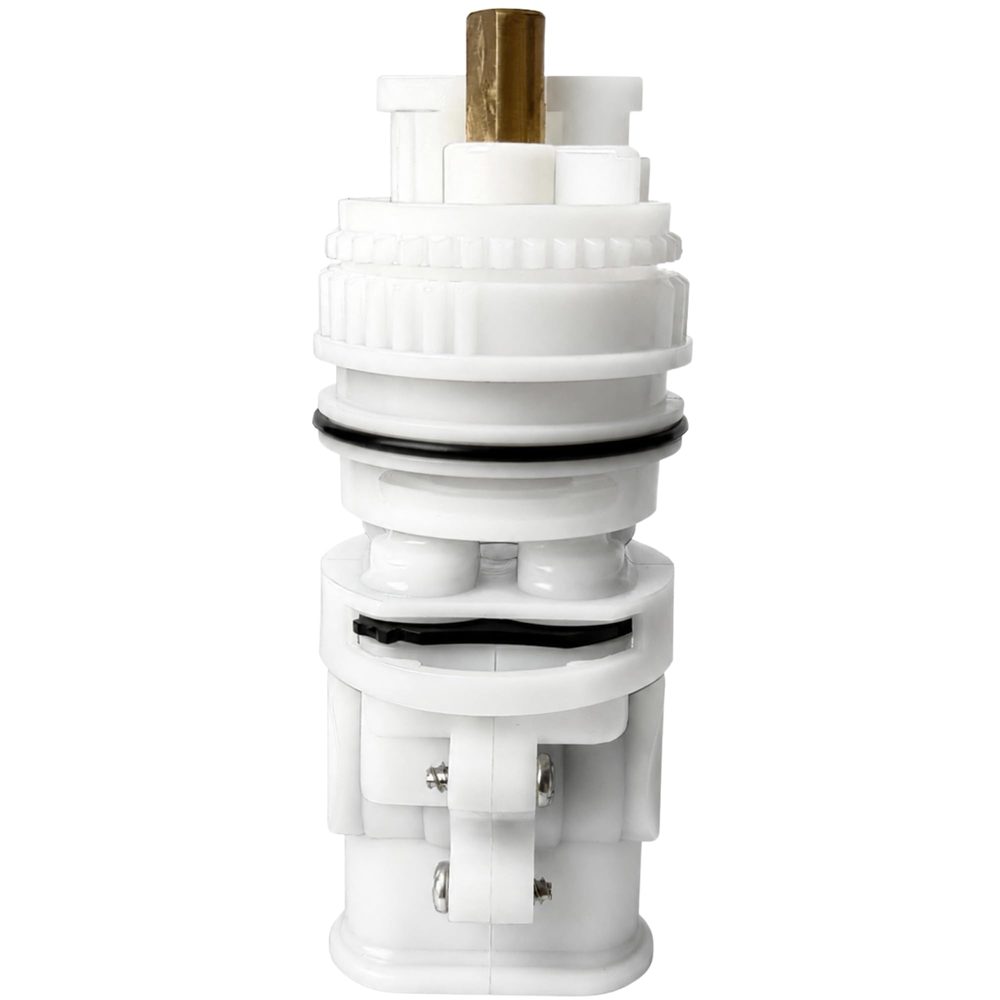
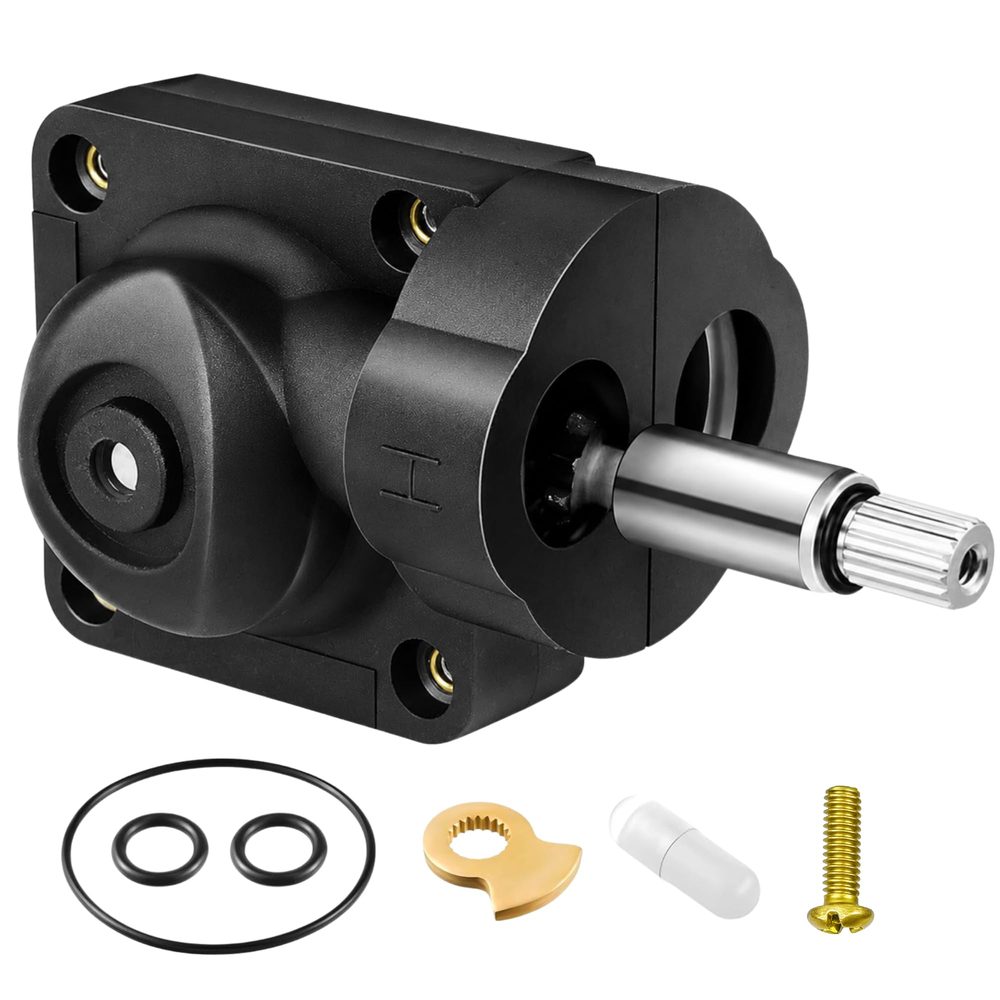
If your valve is not one of these, the identification guide lists the other brands we cover.
Old Galvanized Pipe: When It Is Behind the Wall
In older homes, the pipe itself can be the cause. Saint Paul Regional Water Services explains that galvanized pipe loses its zinc coating over years of exposure to minerals in the water, which narrows the inside of the pipe, restricts flow and causes low water pressure. Ogden City's utility names steel pipe clogged with deposits as a common cause in older homes.
Replacing corroded pipe is a job for a licensed plumber.
Common Mistakes to Avoid
Buying parts before Step 1. If every faucet in the house is weak, a new showerhead or cartridge will not fix it.
Removing the flow control. Showerhead makers say to leave it in and federal rules require it at manufacture. Clean the inlet screen instead.
Skipping the stops. After any valve work, check that both stops are fully open before you decide a part is bad.
Working on the valve with the water on. Shut off the supply and relieve pressure before you pull a cartridge, and flush the valve body before the new one goes in.
Sources
- Ogden City, Low Water Pressure: bids.ogdencity.com/505/Low-Water-Pressure
- Marana Water, pressure reducing valves: maranaaz.gov
- International Residential Code P2903.3 (2018, as adopted by Denver): up.codes
- City of Blaine, Water Heater Flushing: blainemn.gov
- Howard County, Water Heater Dip Tube Issues: howardcountymd.gov
- Delta, How to Clean a Shower Head: deltafaucet.com
- American Standard, How to Clean a Shower Head: americanstandard.ca
- Kohler showerhead instructions: 1141989 and 1170104
- 10 CFR 430.32(p), showerhead standard: law.cornell.edu
- EPA WaterSense, Showerheads: epa.gov
- Moen, Shower Faucet: Low Flow (M-Core): solutions.moen.com
- Moen, Shower Faucet: Low Flow (PosiTemp): solutions.moen.com
- Moen, How to Operate PosiTemp Stop Check Valves: solutions.moen.com
- Moen, 1222 Cartridge replacement (shutoff, flushing the valve body): solutions.moen.com
- Kohler, Rite-Temp valve troubleshooting: assist.kohler.com
- Delta R10000 valve installation instructions: Delta document (PDF)
- Saint Paul Regional Water Services, plumbing information for homeowners: stpaul.gov

FourHome Shower Cartridge Replacements
Replacement shower cartridges for Moen, Delta, Kohler, Gerber, Grohe and Mixet valves, listed with the part numbers they replace.
Shop Shower Cartridges on Amazon →