Kitchen Sink Clogged Before Thanksgiving? Clear It Without Drain Cleaner
Thanksgiving week is hard on a kitchen drain. Pans get soaked, turkey gets rinsed, gravy and butter get scraped, and every dish eventually goes through the sink. UF/IFAS Extension in Sarasota County says plumbers call the day after Thanksgiving one of their busiest, most call-heavy days. A sink that is already slow in October can be the one that stops on Wednesday night.
This guide goes from the cheapest fix to the most effort, and none of it needs a bottle of drain cleaner. It covers a plunger, the P-trap under the sink, a jammed garbage disposal, and the short list of things that tell you to put the tools down and call a plumber. Then it covers what to do with the grease, because that is what put the clog there in the first place.
What is actually clogging a kitchen sink
Atlanta's Department of Watershed Management puts it plainly: substances that go down the drain smoothly when warmed by hot water will cool, harden and coat the inside of the pipes. Pierce County, Washington says the same about rinsing fats away with hot water and detergent: the grease just moves a little farther down the pipe. In a kitchen, the clog is usually that grease, plus whatever food scraps it caught on the way.
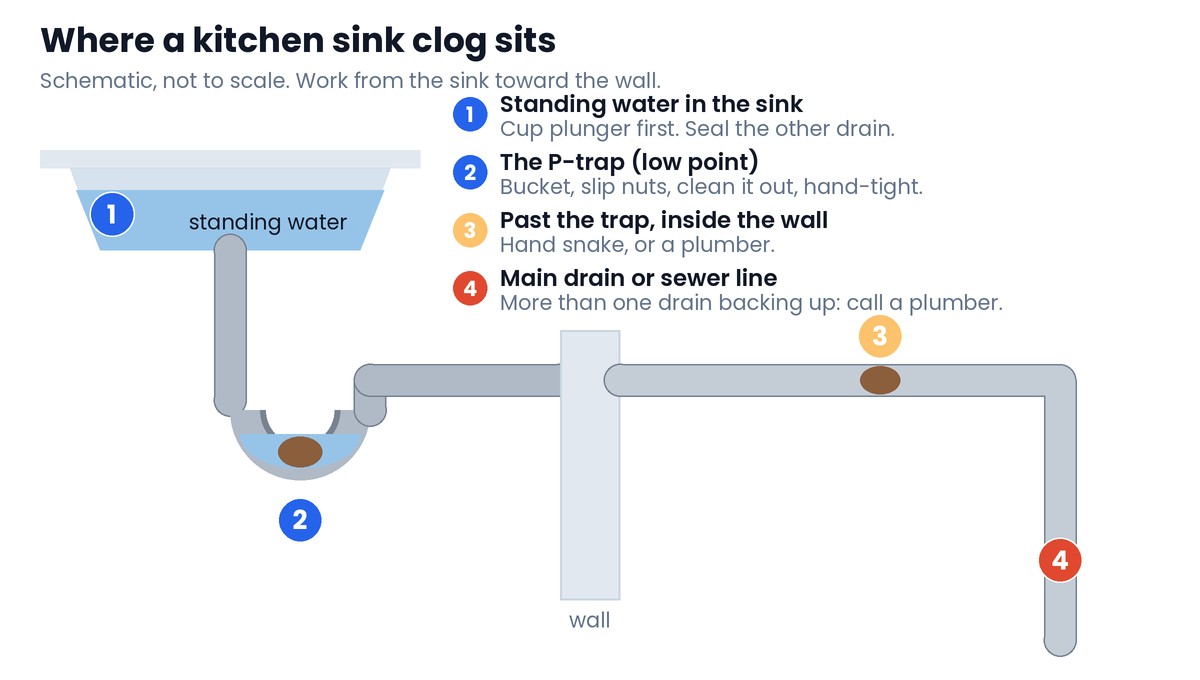
Where it sits decides the fix. The diagram shows the four places to think about, working from the sink toward the wall.
Not sure which one you have? Our sister site has a short troubleshooter for the most common case, grease and food buildup in the kitchen drain, that asks a few questions about what the sink is doing.
Poison Control describes severe chemical burns to the mouth, throat, esophagus and stomach from swallowed drain cleaner, and says to wear goggles and rubber gloves if you do use one. It also warns that mixing household cleaners can produce toxic fumes, so never put two products in the same drain. Family Handyman adds the rule that matters for the steps below: do not plunge or snake a drain that you have already poured drain cleaner into, because the chemicals can splash and cause serious burns. If you already poured some in, stop here, keep gloves and eye protection on, and call a plumber. For skin or eye contact or a swallowed dose, Poison Control's line is 1-800-222-1222. Never put drain cleaner in a garbage disposal: InSinkErator and Waste King both list it among the things to keep out.
What you need
- A cup plunger, the kind with a flat rim, sized to cover your drain.
- A rubber sink stopper for the second bowl if you have a double sink, and a clamp or locking pliers if a dishwasher hose runs to the drain.
- A bucket, rubber gloves and a flashlight for the trap.
- Slip-joint pliers. The plastic slip nuts on most traps loosen by hand, and the pliers are for the last quarter turn when you put them back.
- Old towels or a rag, and a small brush for the inside of the trap.
- A hand auger, also called a drain snake, only if the plunger and the trap do not do it.
- For a garbage disposal: a hex wrench. Most disposals come with one, and InSinkErator names it on its jam page.
Step by step, easiest first
Step 1: Try hot tap water, not boiling
If the sink is slow but still moving and the drain smells of grease, run hot water from the tap for a minute or two. Do not use a kettle of boiling water. Charlotte Pipe rates its PVC drain, waste and vent pipe for non-pressure use where the operating temperature will not exceed 140 degrees F, and boiling water is 212 degrees F. A Roto-Rooter plumber quoted by Food Network says boiling water can liquefy clinging grease and clear it from the sink drain, but that the grease flows deeper into the branch drain and may congeal again. Hot water is a way to move a little grease along. It will not fix a clog that has stopped the water.
Step 2: Baking soda and vinegar, if the sink is only slow
Home Depot gives the method as 1 cup of fresh baking soda down the drain, followed by 1 cup of white vinegar, a 15 minute wait and a flush with hot water. Family Handyman lists it too, but with boiling water, which we skip. Poison Control says the mix is unlikely to be strong enough for tough clogs caused by oil and grease, which is the usual kitchen clog, so this is the weak case for the method. The same Roto-Rooter plumber says it is fairly effective against toothpaste and soap scum buildup but not against hair clogs or serious organic kitchen sink clogs, so treat it as a cheap first try on a slow drain. If the sink is full and not moving, skip this step.
Step 3: Plunge it
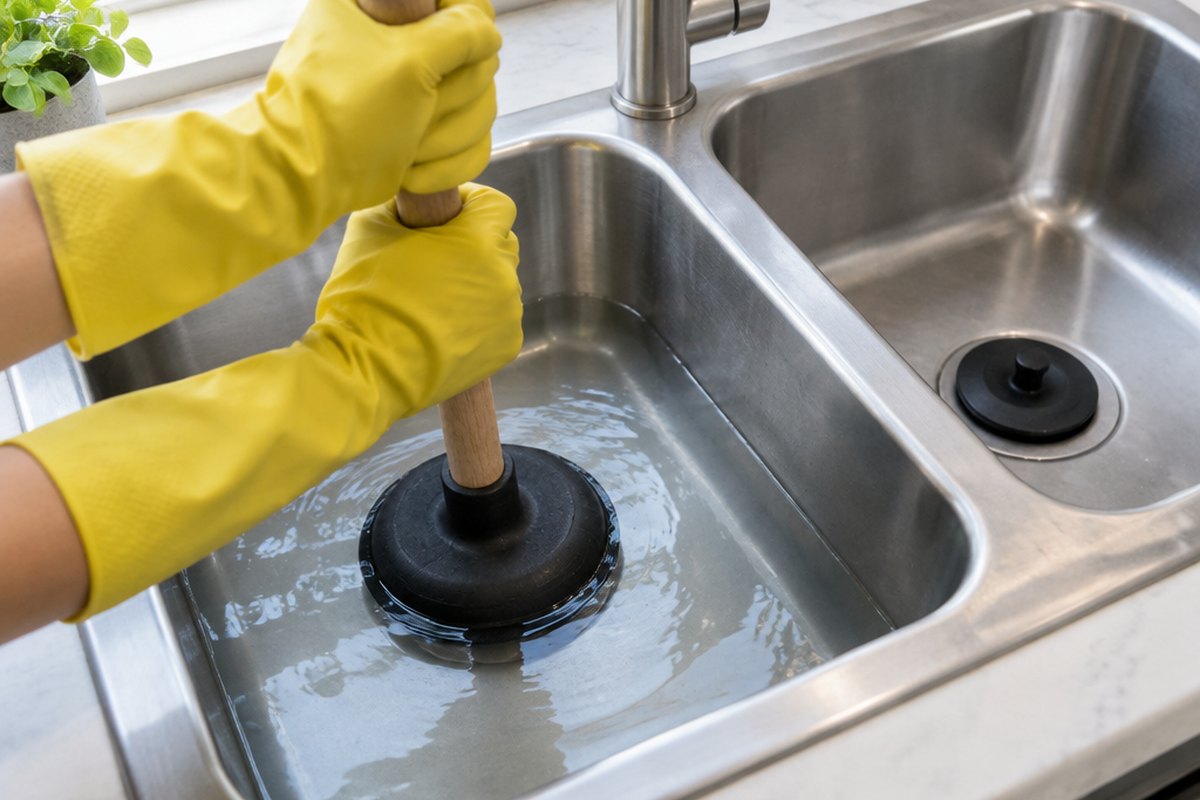
This is the fix for standing water. Use a cup plunger with a flat rim, and put enough water in the sink to cover the head of the plunger; Home Depot says to submerge it. Two preparations, from Home Depot and Hunker, matter more than the plunging does. On a double sink, seal the drain of the other bowl with a rubber stopper, so the pressure goes at the clog and not out the other side. If a dishwasher drains through a flexible hose into the same line, clamp the hose closed first. Then plunge up and down vigorously for about 20 seconds, as Family Handyman puts it, and see whether the water moves.
Step 4: Pull the P-trap
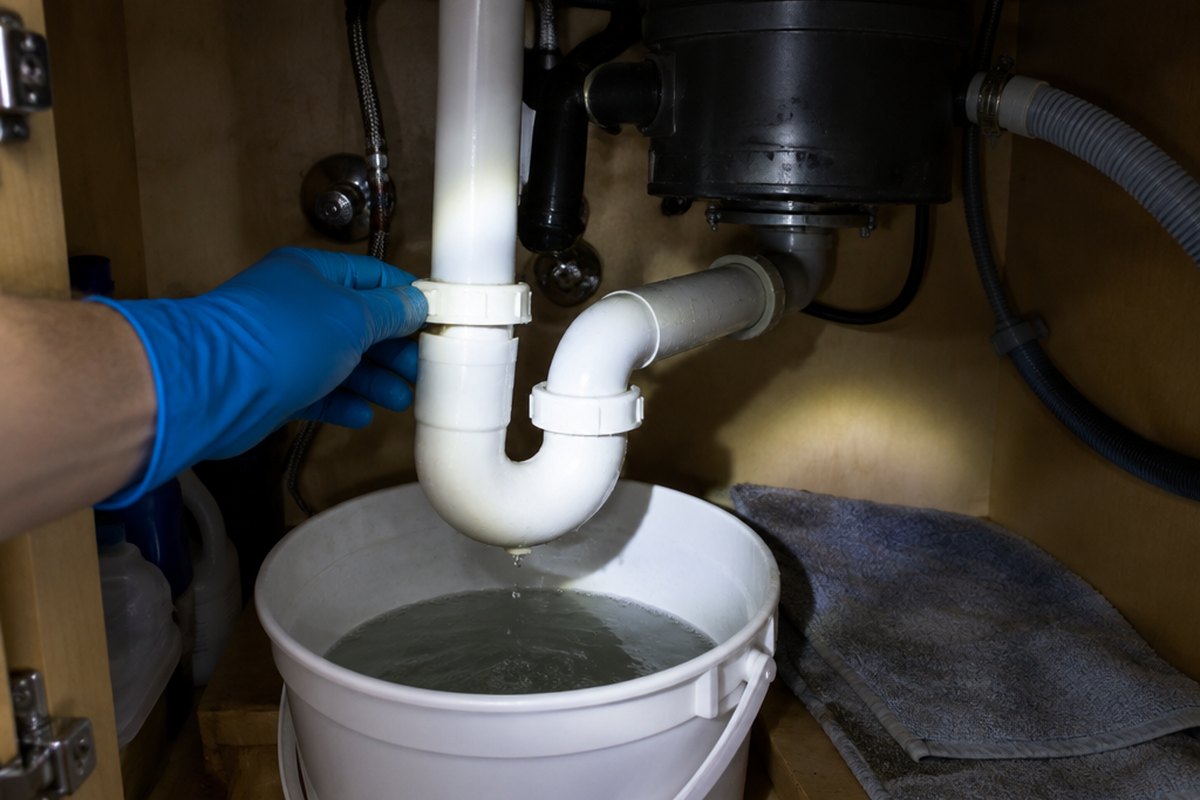
The trap is the U-shaped pipe under the sink, and it is the low point where grease and scraps collect. Roto-Rooter and Family Handyman both say the same thing about the next step: if plunging did not work, take the trap off over a bucket. Bail or sponge the standing water out of the sink first. If you have a disposal, switch it off and unplug it or turn off its breaker, then put the bucket directly under the trap, because dirty water will flow out when it comes loose.
- Loosen the slip nut at each end of the trap. On a double sink, Family Handyman loosens the nut on the trap arm assembly and the one on the continuous waste tee, then wiggles the trap free.
- Empty the trap into the bucket and clean the inside with a brush. Wear gloves, as Roto-Rooter says.
- Shine the flashlight into the pipe stub that goes into the wall. If you can see the clog, pull it out.
- If the trap was clear, the clog is farther along. Roto-Rooter says that if the clog is beyond the P-trap, it is time to call a professional.
Step 5: Put the trap back and test it
Family Handyman gives the size for a standard kitchen sink trap as 1-1/2 inches. Each slip nut sits over a beveled washer, and Family Handyman and Hunker both say the large end of the washer goes against the slip nut. Tighten the nuts hand-tight plus a quarter turn with pliers, per Family Handyman; over-tightening distorts the washer and causes leaks. Then run water and check every joint with a dry tissue, which Family Handyman uses to find a slow leak. If a joint weeps, Hunker says to give it a quarter turn more and check the washer.
Step 6: Only then, a hand auger
If the trap is clean and the sink still will not drain, the blockage is past the trap and into the wall. Family Handyman lists a hand auger, also called a drain snake, as the next tool. Hunker notes that a plumber has a longer snake than a homeowner does. If a hand snake does not clear it, that is the signal to stop.
Garbage disposal: jammed, humming or backed up
A disposal that hums and does not spin is jammed, and the fix is on InSinkErator's jam page. First, bail or sponge out any standing water, then switch the unit off and unplug it under the sink or turn off its breaker, since a tool is going into it. The operating instructions say to switch off or unplug the unit before trying to free a jammed rotor, and do not put your hand in the disposal at any time.
- Put the hex wrench in the hole at the bottom center of the unit and work it back and forth in both directions until it turns freely in complete circles.
- Press the small red reset button on the unit.
- Look down into the disposal with a flashlight. If you can see what jammed it, remove it with tongs or pliers, not your fingers.
- Turn the water on, then the disposal.
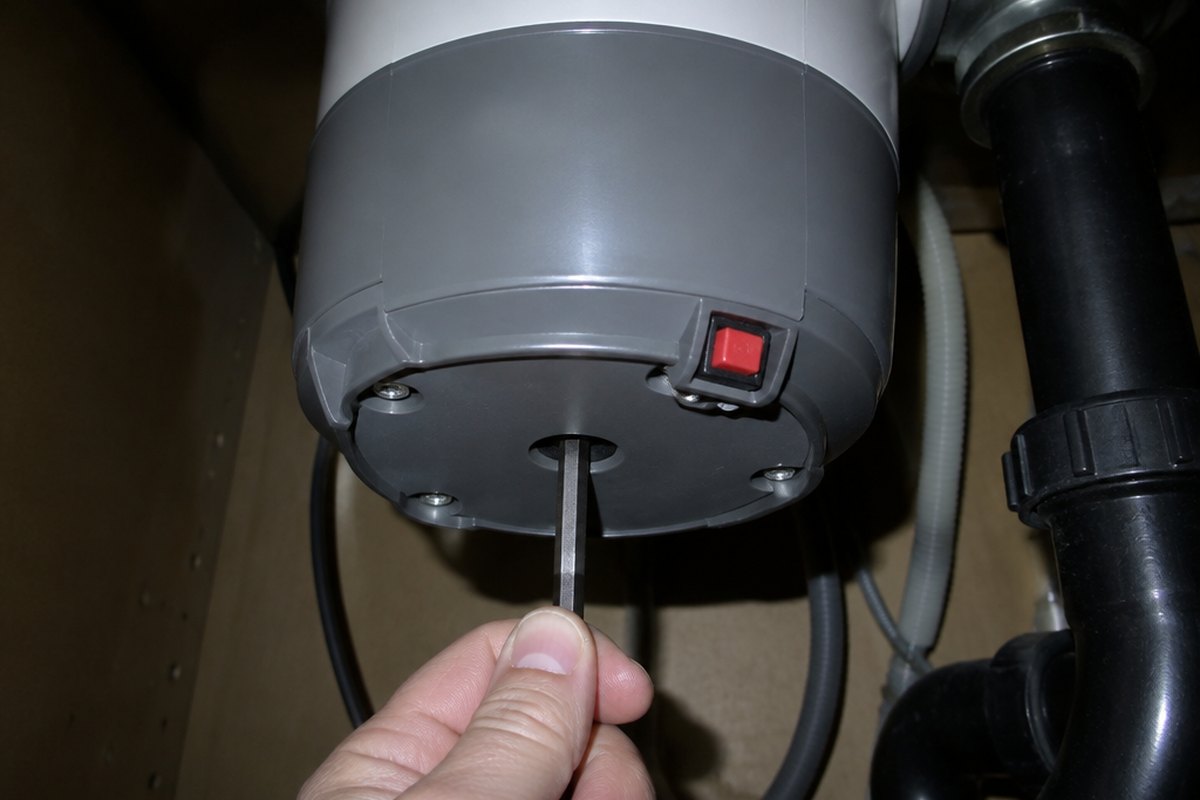
Waste King's FAQ describes the same two moves, a wooden spoon or an unjamming wrench, then the reset button, and GE tells owners to turn the switch off first and wait a few minutes before pressing reset. InSinkErator and Waste King both say never to put a hand in.
The other half of disposal care is what goes in. InSinkErator says to run a steady stream of cold water before the unit starts, to keep the water running while you grind, and to let the water run a few seconds after. It says never to put fats, oils or grease in, and that its Standard Series cannot grind stringy and fibrous materials such as banana peel, celery and rhubarb. Check your own model: InSinkErator's other series list more as grindable. Celery from the stuffing prep is a Thanksgiving example that belongs in the trash on a basic unit.
Thanksgiving week: keep the grease out of the drain
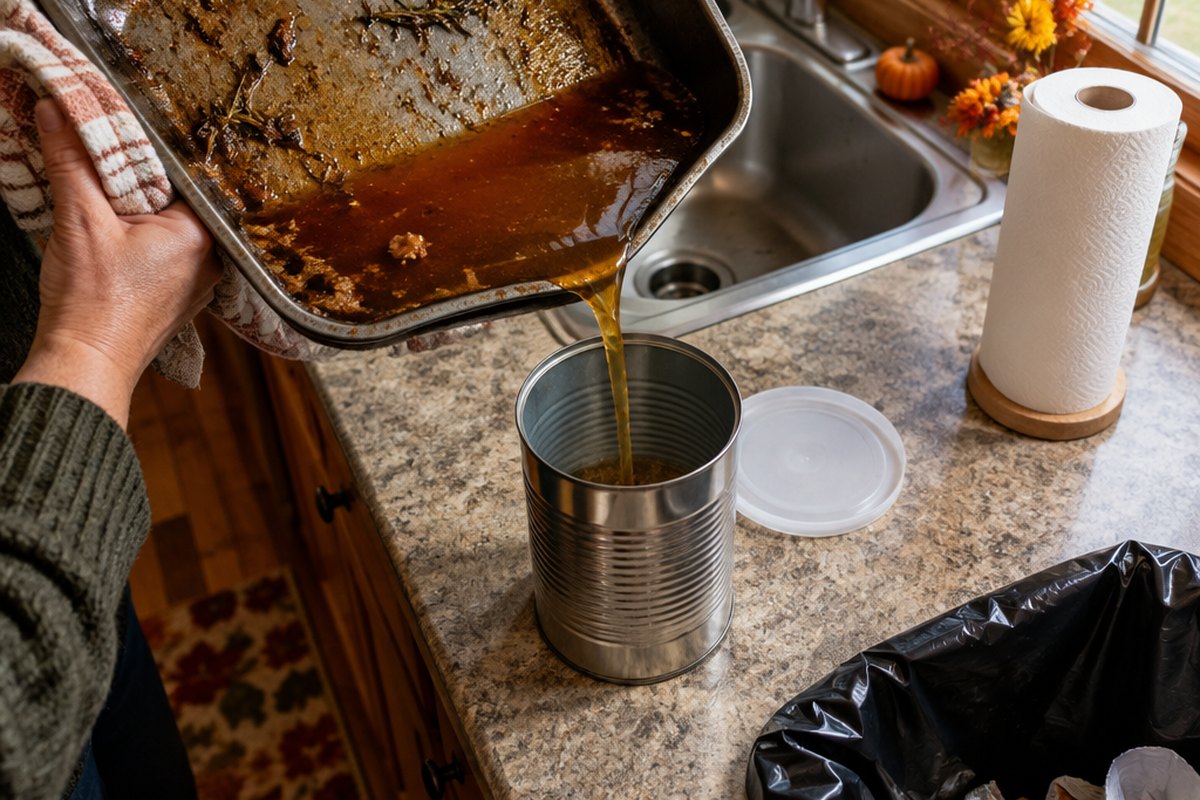
Every utility we read says the same three things. Scrape it, contain it, trash it.
| What it is | Where it goes | Who says so |
|---|---|---|
| Turkey drippings, gravy, butter, cooking oil | Cool it, pour it into a can or jar, and put it in the trash. Oklahoma City adds a lidded container in the freezer until it is solid. | Atlanta Watershed, Rockville, Oklahoma City |
| Greasy pans and plates | Wipe with a paper towel before washing, and scrape scraps into the trash. | Atlanta Watershed |
| Anything you were going to put in the disposal with grease | Not in the disposal. Atlanta says a disposal only shreds solids and will not keep grease out of the drain. | Atlanta Watershed, InSinkErator |
| Celery, banana peel, rhubarb | Trash on a basic unit. Check your manual. | InSinkErator |
| A turkey fryer's worth of oil | Not a kitchen drain job. Oklahoma City sends large amounts to a household hazardous waste site, so ask your own city or county. | Oklahoma City |
Two more habits from the same pages. Atlanta says to use a strainer in the sink, and that more than half of the sanitary sewer spills in Atlanta are caused by grease. Pierce County notes that the risk of clogs and backups rises in the holidays, when many of us do more cooking for gatherings and events. A strainer and a coffee can keep most of it out of the pipe.
While the cabinet is open: a two-minute leak check
If you have just been under the sink with a flashlight, spend two more minutes there. Family Handyman dabs the shutoffs and connections with a dry tissue or paper towel and looks for wet spots, and tightens the packing nut if a shutoff valve stem drips. This Old House runs a finger along the trap to check for dampness, checks the lines that go to the faucet, the dishwasher and an ice maker, and looks for discoloration or staining on the floor of the cabinet. Finding a slow leak now beats finding it on Thursday.
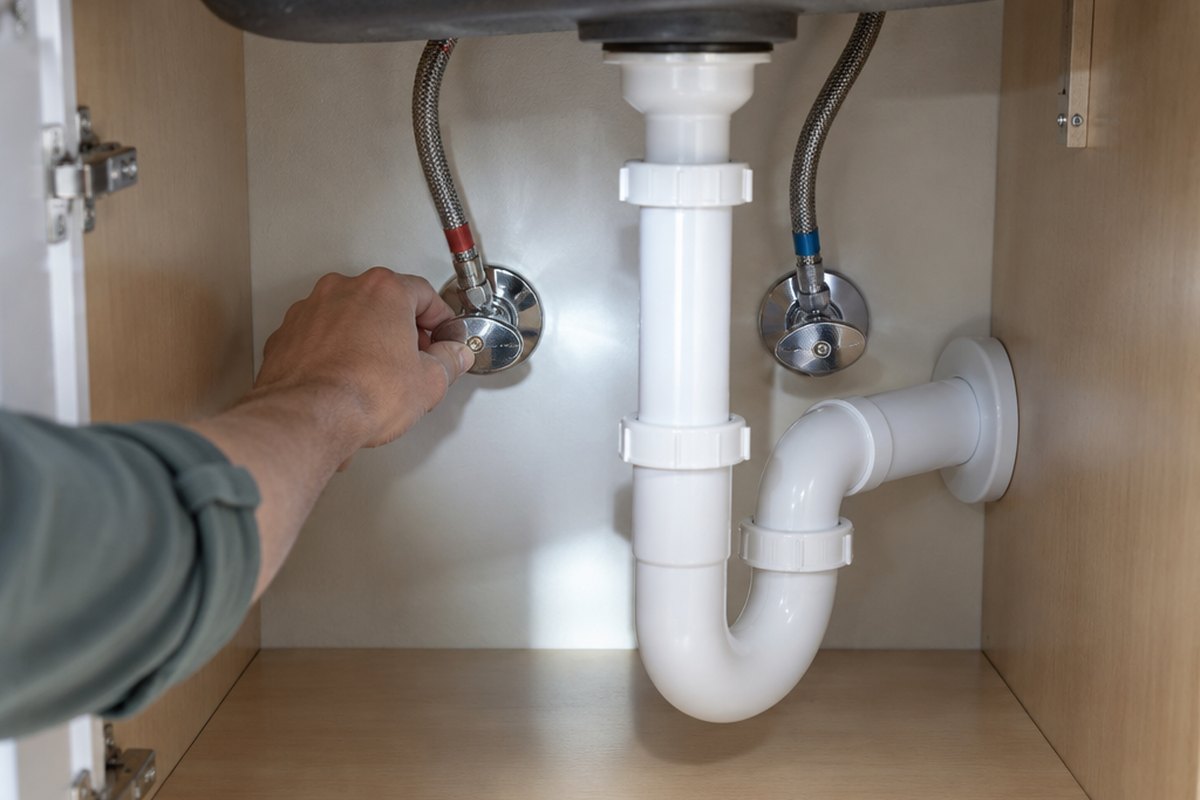
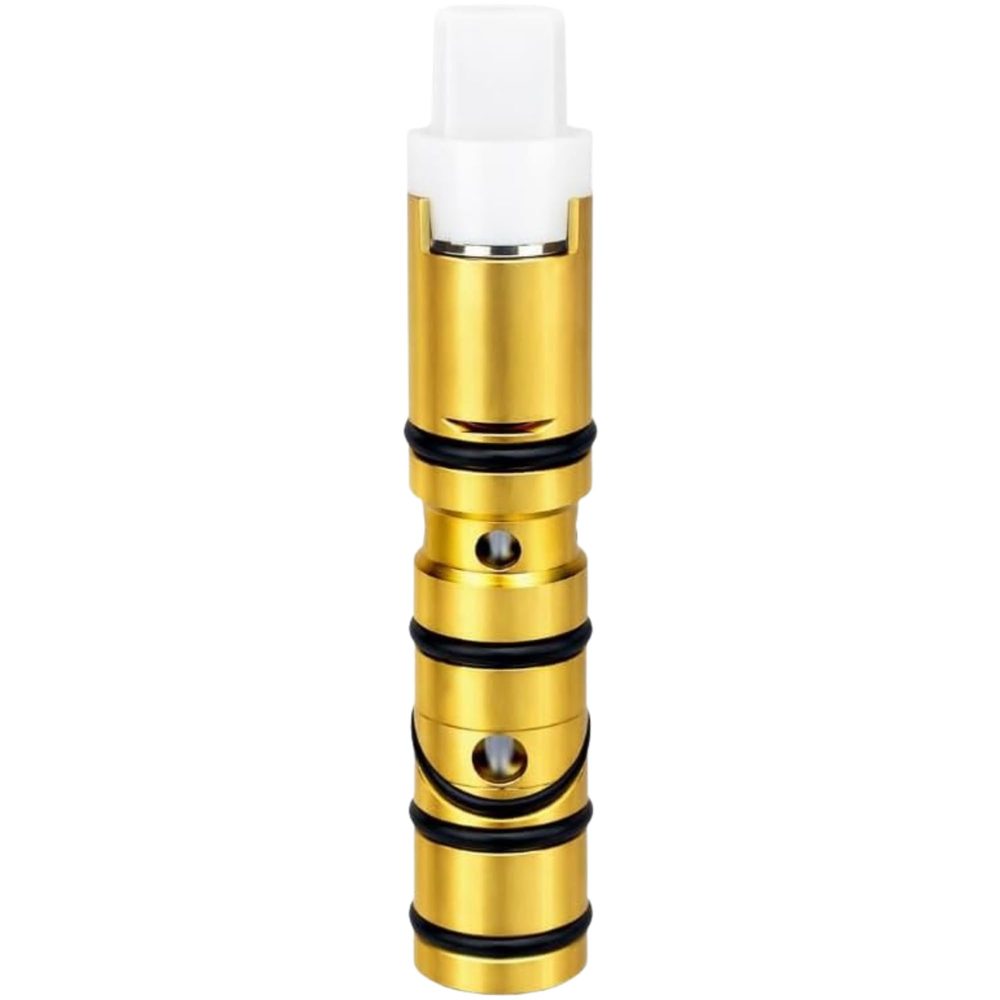
And while you are at the sink: if the faucet drips with the handle off, that is one worn part, not a new faucet. Our kitchen faucet guide has the Moen and Delta steps, and the two parts it covers are here.

When to stop and call a plumber
- The trap is clean, a hand snake does not clear it, and the sink still will not drain. Roto-Rooter says a clog beyond the P-trap is a job for a professional.
- More than one drain is backing up, especially in the basement or on a lower floor. Roto-Rooter says that usually means a problem in the main sewer line.
- A toilet gurgles when other fixtures run, or sewage comes up into the home. HomeTips lists both as signs of a sewer line clog.
- You poured drain cleaner into the sink before you started. Do not plunge or snake it.
- A slip nut or a shutoff leaks after you have reseated it, or a shutoff will not close.
Frequently asked questions
Can I pour boiling water down a clogged kitchen drain?
We would not. Charlotte Pipe rates its PVC drain, waste and vent pipe for non-pressure use where the operating temperature will not exceed 140 degrees F, and boiling water is 212 degrees F. Hot tap water is the conservative choice. A Roto-Rooter plumber quoted by Food Network says boiling water can liquefy clinging grease, but that the grease may congeal again deeper in the branch drain, which is also what Atlanta and Pierce County say about grease and hot water.
Does baking soda and vinegar unclog a kitchen sink?
Sources split. Home Depot and Family Handyman both list it as a gentle first try, with 1 cup of baking soda, then 1 cup of white vinegar, a 15 minute wait and a hot water flush at Home Depot. A Roto-Rooter plumber quoted by Food Network says it is fairly effective against toothpaste and soap scum buildup but not against hair clogs or serious organic kitchen sink clogs. Poison Control adds that it is unlikely to be strong enough for tough clogs caused by oil and grease, so a grease clog is the weak case. On a sink that is slow, it is a cheap first try. On a sink that is full and not moving, go straight to the plunger.
Why avoid chemical drain cleaner?
Poison Control describes severe chemical burns to the mouth, throat, esophagus and stomach if drain cleaner is swallowed, and warns that mixing household cleaners can produce toxic fumes. Family Handyman says not to plunge or snake a drain you have poured drain cleaner into, because the chemicals can cause serious burns. InSinkErator and Waste King both list drain cleaner among the things never to put in a disposal.
My garbage disposal hums but will not spin. What do I do?
Switch the disposal off, unplug it under the sink or turn off its breaker, and never put your hand in it. InSinkErator then has you put its hex wrench in the hole at the bottom center and work it back and forth until it turns freely in complete circles, press the red reset button on the unit, look in with a flashlight and remove anything you can see with tongs or pliers, and restart with the water running.
How do I know if the clog is in the main line and not just the sink?
Roto-Rooter says that when more than one drain is backing up, especially in the basement or on lower floors, it usually points to a problem in the main sewer line. HomeTips adds a toilet that gurgles when other fixtures run, and sewage backing up into the home. Stop DIY at that point and call a licensed plumber.
Sources
Every step above comes from these pages. We opened each one on October 6, 2026.
- Charlotte Pipe, PVC DWV submittal: non-pressure use where the operating temperature will not exceed 140 degrees F.
- Hunker, boiling water and drains, How to Unclog Kitchen Sinks and How to Install Slip Joint Washers.
- Food Network, How to Unclog a Sink (quoting a Roto-Rooter plumber on boiling water, baking soda and vinegar, mixing chemicals and plungers).
- The Home Depot, How to Unclog a Sink.
- Family Handyman, How to Clear Clogged Sink Drains, What Is a P-Trap?, How to Unclog Drains Without Chemicals and Find and Repair Hidden Plumbing Leaks.
- Roto-Rooter, How to Unclog a Kitchen Sink and How to Tell If Your Main Sewer Line Is Clogged.
- HomeTips, Sewer line clog signs. This Old House, How to Prevent Household Leaks.
- Poison Control, What's in drain cleaner and cleaning products.
- Atlanta Department of Watershed Management, Keep Your Pipes FOG Free This Holiday Season and grease management.
- City of Oklahoma City, Don't let fats, oils and grease gobble your holiday plans. Pierce County, WA, Fats, Oils and Grease. City of Rockville, Don't let a clog become an unwanted holiday guest. UF/IFAS Extension Sarasota County, Avoid Thanksgiving FOG.
- InSinkErator, Fixing a jammed garbage disposal, operating instructions, how to use a garbage disposal and FAQ.
- Waste King, support FAQ. GE Appliances, garbage disposer reset.
Replacement cartridges, stems, seats, springs, stoppers and pop-up drains for Moen, Delta, Kohler, Pfister, Glacier Bay and more, shipped from Amazon fulfillment centers with Prime delivery.
See the full FourHome assortment on AmazonFourHome is an independent brand and is not affiliated with InSinkErator, Waste King, GE Appliances, Moen Incorporated, Delta Faucet Company or The Home Depot. Brand names and part numbers are used only to identify compatibility or to cite their published instructions. Follow the instructions that came with your disposal and faucet, switch a disposal off before you work near it, and call a licensed plumber if a drain stays blocked or a shutoff will not close.
FourHome is not affiliated with or endorsed by any faucet manufacturer. Brand names and part numbers are used only to identify compatibility.