Water Coming Out of the Tub Spout While the Shower Is On? Fix the Diverter

You pull the knob or turn the middle handle, the showerhead comes on, and the tub spout keeps running. Sometimes it is a dribble. Sometimes it is half the water you are paying to heat. Either way the part that is supposed to send water up to the showerhead, the diverter, is not closing.
This guide finds which of the three kinds of diverter you have, measures the leak in one minute, and then walks through the two fixes a homeowner can do: a new tub spout, or a new diverter stem behind the center handle of a three-handle faucet. Every step comes from faucet makers, a plumbing company, a home repair site, a state energy study and our own part pages, and the sources are at the end.
Why it matters more than it looks
A leaking diverter sends water down the drain before it reaches you. That is water you paid for and energy you paid to heat. A New York State Energy Research and Development Authority study measured diverters in about 130 homes: 34 percent of them leaked more than 0.1 gallon per minute in shower mode, the average leak above that line was 0.8 gallon per minute, and the worst was 3.0 gallons per minute. Their worked example, a 1.1 gallon per minute leak and a 10 minute shower each day, came to about 419 kilowatt hours a year of recoverable energy on an electric water heater, or about 16.9 therms on gas, after the study's 0.7 savings factor. The same study puts the fix at under an hour for a plumber or anyone with basic plumbing knowledge, as long as the spout is not stuck.
Step 1: Find your diverter
There are three places it can be. Look at the wall of your tub before you buy anything.
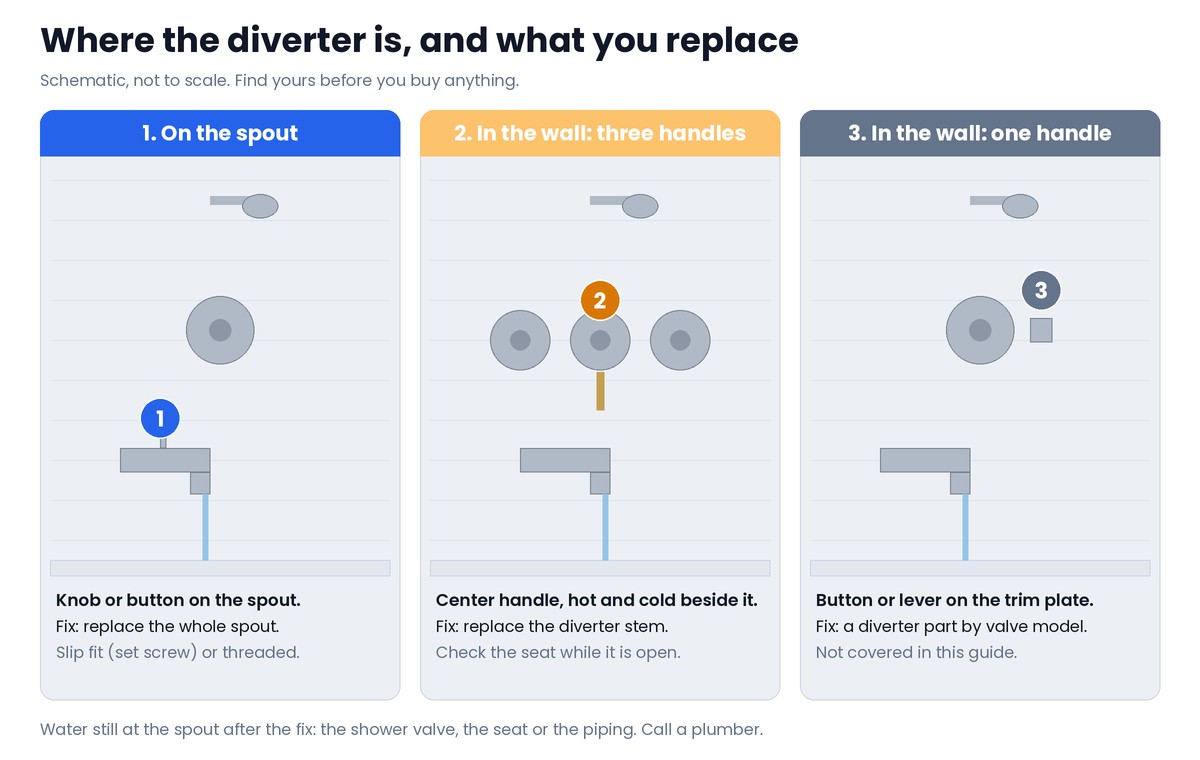
| Where it is | What you see | What you replace |
|---|---|---|
| On the spout | A knob you pull up, or a button you push, on the tub spout itself. One or two handles on the wall. Common in newer homes. | The whole tub spout. The diverter is built into it. |
| Behind the center handle | Three handles in a row: hot, diverter, cold. Turning the middle one sends water up. Common in older homes. | The diverter stem behind the middle handle, and the seat it closes against if it is pitted. |
| Inside a single-handle valve | One handle, and a small button or lever on the trim plate rather than on the spout. | A diverter cartridge specific to the valve model. That repair is outside this guide; your valve maker has the part and the sheet. |
Step 2: The one-minute bucket test
Before you take anything apart, measure the leak so you know what you are fixing and can prove it is fixed afterward. This is the test the New York study used.
- Turn the shower on and set the diverter to shower.
- Hold or set a bucket under the tub spout for 60 seconds and collect every drop.
- Measure what you caught with a measuring cup or a marked bottle and convert it to gallons. Because you collected for one minute, that number is gallons per minute.
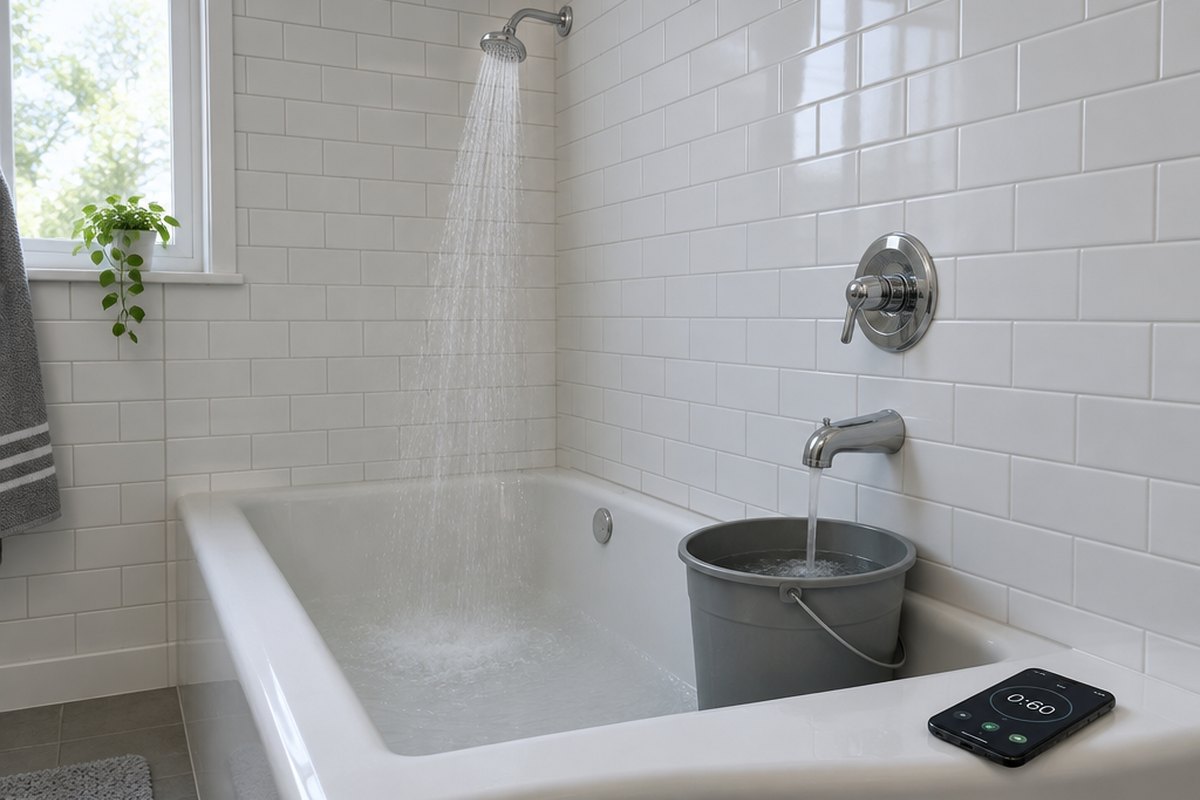
A few drops are common on a worn spout. The study recommends accepting a replacement spout only if it leaks less than 0.02 gallon per minute, which is about two and a half fluid ounces, or five tablespoons, in a minute, so that is the number to aim for after the fix.
Step 3: Rule out the cheap causes first
Roto-Rooter's first advice for a spout that runs during the shower is to take the diverter apart and flush out any debris that keeps its disk, handle or button from closing all the way. If it is mineral scale, soak the parts in vinegar overnight and scrub them gently with a soft brush. Shut the water off first before you open a handle or push-button diverter in the faucet body. A spout diverter can simply be taken off the wall and cleaned or replaced.
Globe Union, the parent company behind the Gerber faucet brand, has a support page for exactly this problem. First: if the trouble started right after plumbing work in your home, call the plumber back before you buy a spout, because the piping may be the cause. Second: take the spout off and turn the water on. If water still comes out of both the pipe and the showerhead with no spout on the wall, the diverter was never the problem and the piping connection needs a plumber. If water comes only from the pipe, check that the pipe sticking out of the wall is not longer than the spout's maximum, which can block the diverter inside; if the length is within spec, replace the spout.
Step 4A: Replace a tub spout with a diverter
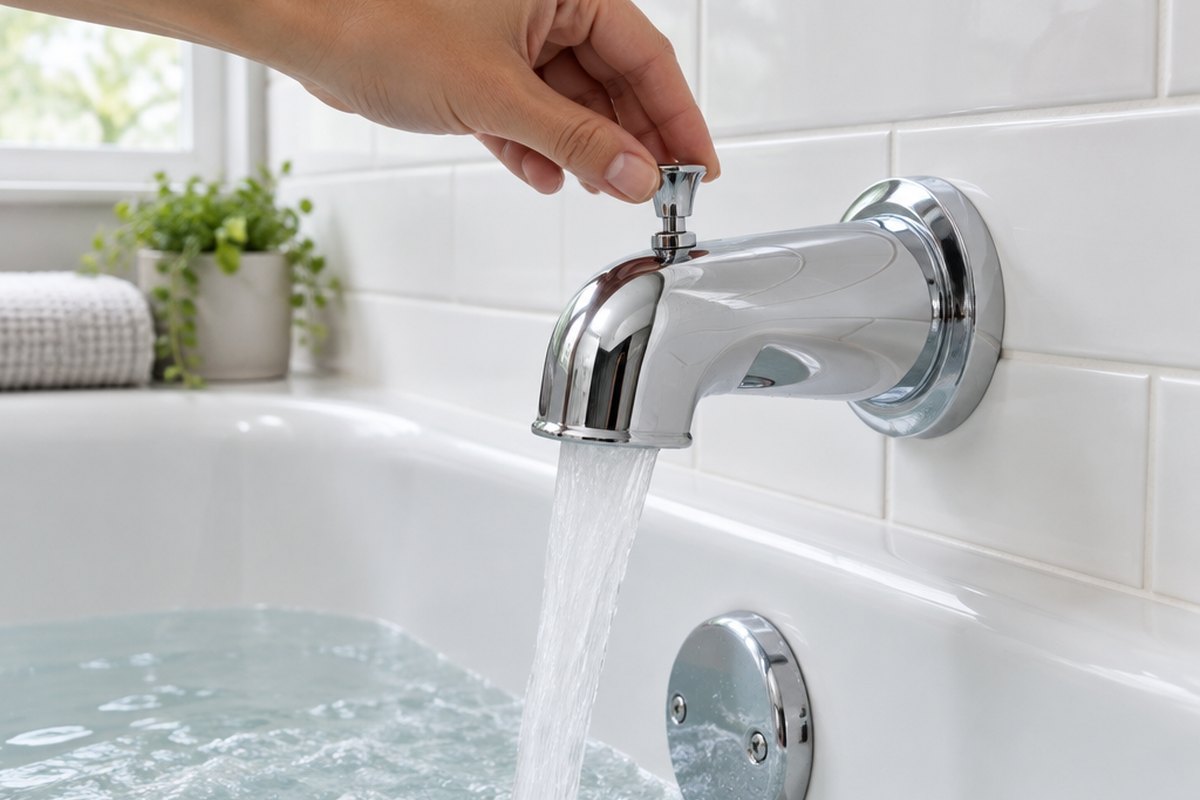
If your diverter is the knob or button on the spout, you replace the spout. There is no serviceable diverter inside most of them, and a new spout is the fix Globe Union and the New York study both land on.
Step 1: Find out how the spout is attached
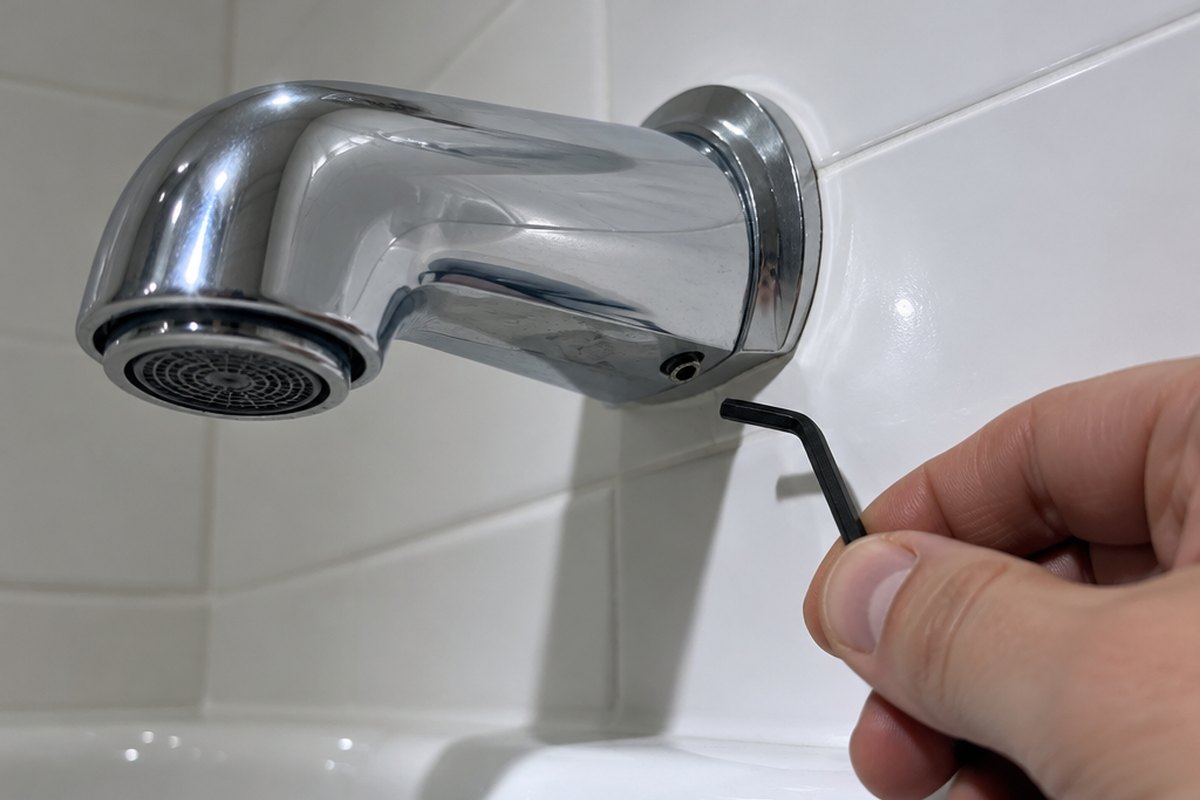
Moen's tub spout page gives the test. Look under the spout, near the wall, for a small hole. If you see a screw in it, the spout is a slip-fit spout that slides over the pipe and is held by a set screw, and the screw takes a 5/32 in. hex wrench. If there is no screw, the spout is threaded onto the pipe. Buy the same kind.
Step 2: Take the old spout off
Turn the faucet off and let the spout drain before you start.
- Threaded spout: turn it counterclockwise by hand. If it is tight, use pliers or a pipe wrench with a rag over the finish. Scrape away any caulk at the base first.
- Slip-fit spout: loosen the set screw until the spout slides off the pipe, then pull it straight toward you. Hunker's guide adds the one thing people forget: keep the set screw away from the drain, because it can go down it.
- If a spout will not move, scrape the caulk with a razor or a putty knife without nicking the pipe, and jiggle it gently before you twist again.
The New York study's main caution is this one: protect the wall and the pipe, and do not force a stuck spout, because a pipe broken off behind the tile may mean opening the wall. If you feel the pipe flex in the wall as you twist, stop. If the spout fights you after the caulk is cut and the set screw is out, stop and call a plumber. The spout costs less than the tile.
Step 3: Put the new one on and test it
Slide or thread the new spout on, tighten the set screw if it has one, and seal the top and sides where it meets the wall as the spout's sheet says. Then run the bucket test again. The study's target for a new spout is under 0.02 gallon per minute.
Step 4B: Replace the diverter stem in a three-handle faucet
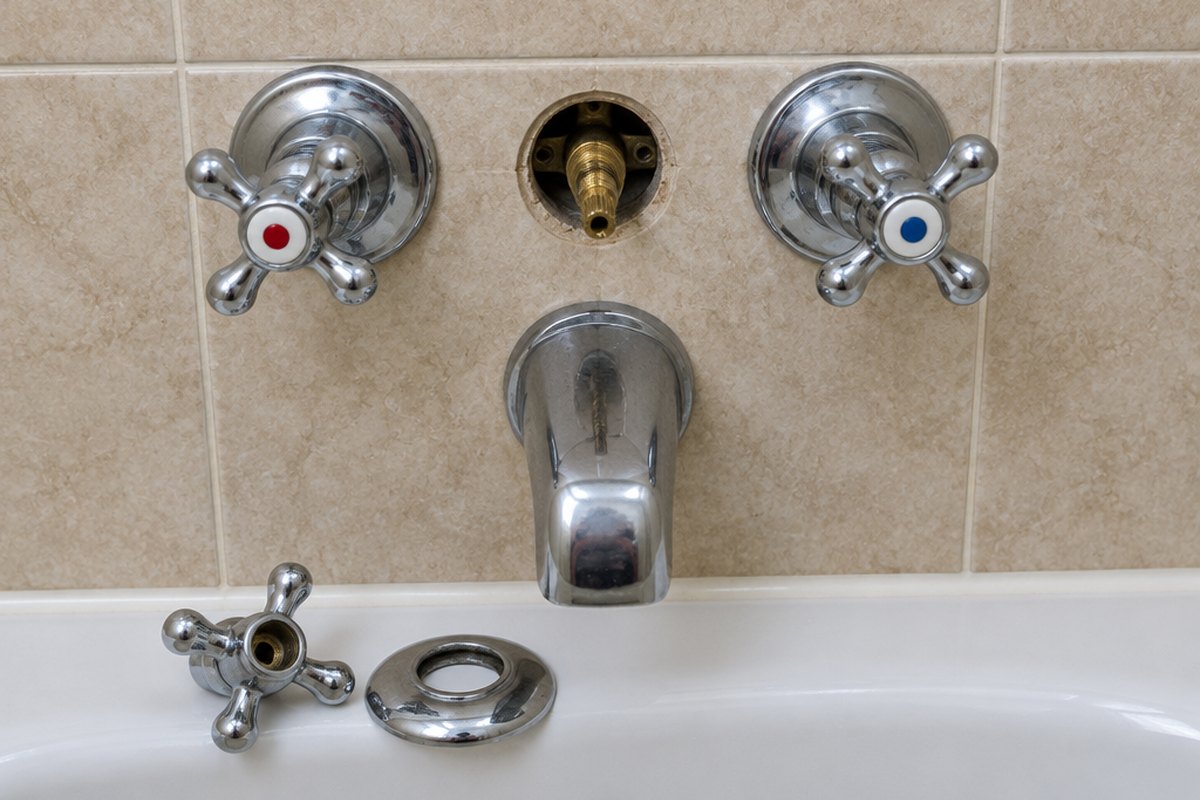
If you have three handles, the diverter is a brass stem behind the middle one, and it is a 15 to 25 minute job with a deep stem socket. The stem is what wears, and sometimes the brass seat it closes against. You do not replace the spout.
Step 1: Shut the water off and bleed the pressure
Close the shutoffs for the bath, or the main, then open the tub spout to let the pressure out of the riser. Skipping this soaks the wall the moment the old stem clears the body.
Step 2: Pull the center handle and escutcheon
Pry off the index cap, take out the handle screw, and lift off the handle, the sleeve and the escutcheon. Set them on a towel in order.
Step 3: Back out the old stem and read it
Put a deep stem socket on the stem and turn it counterclockwise. Before you buy anything, measure the old stem from the tip of the broach to the end, count the points on the splined tip, and note the maker of the faucet. Those three numbers pick the part. Diverter stems from different makers do not interchange, and the hot and cold stems on the same faucet are different parts again.
Step 4: Look at the seat
Shine a light into the valve body. On a Pfister or Kohler three-handle valve the stem closes against a brass seat; on a Sayco 308 the stem's barrel seals in a bore. A pitted seat or a worn bore keeps sending water to the spout no matter how new the stem is, so renew a pitted seat with a seat wrench while the valve is open.
Step 5: Thread the new stem in and test
Start the new stem by hand for the first turn, snug it with the socket, turn the water on and run the spout. Then engage the diverter and check that the spout stops before the trim goes back on. Refit the escutcheon, sleeve and handle, and run the bucket test one more time.
These are the three-handle diverter stems FourHome makes. Each part page carries the exact length, broach count, cross references and what ships in the box, so you can match it to the old stem before you order.
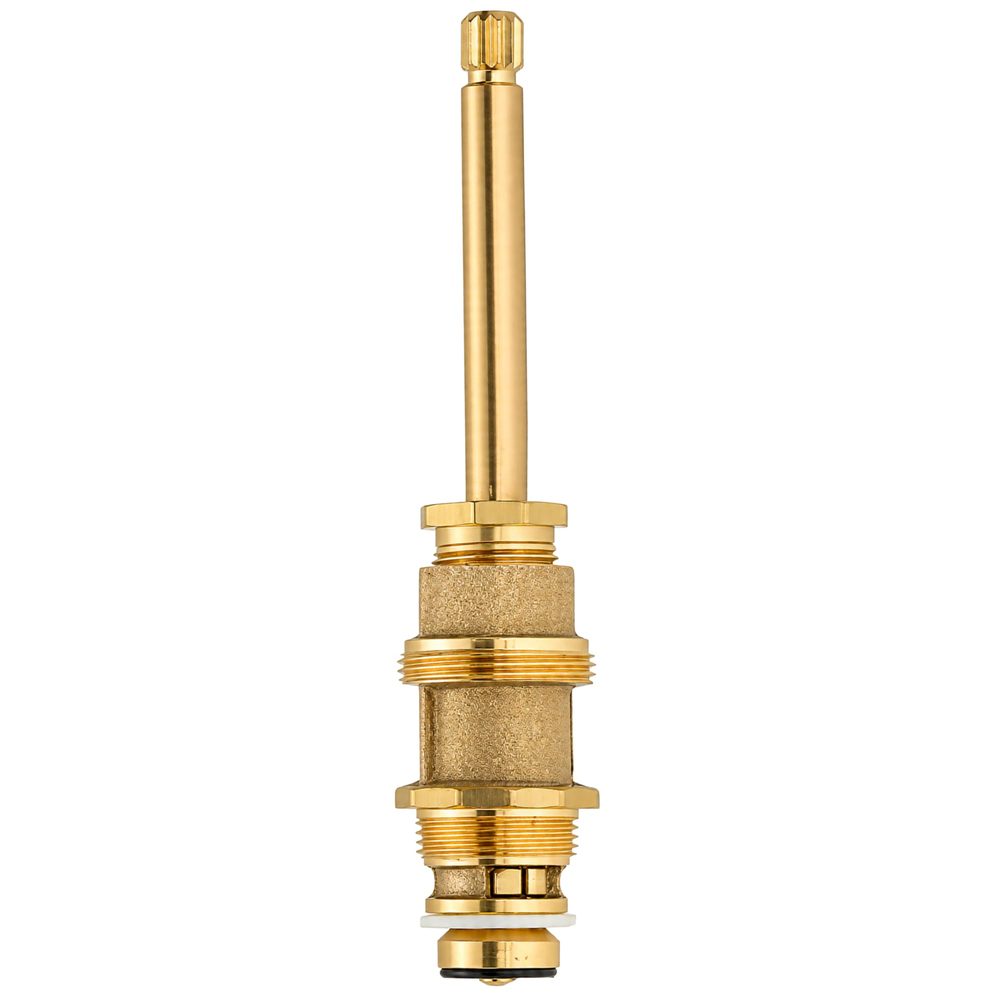
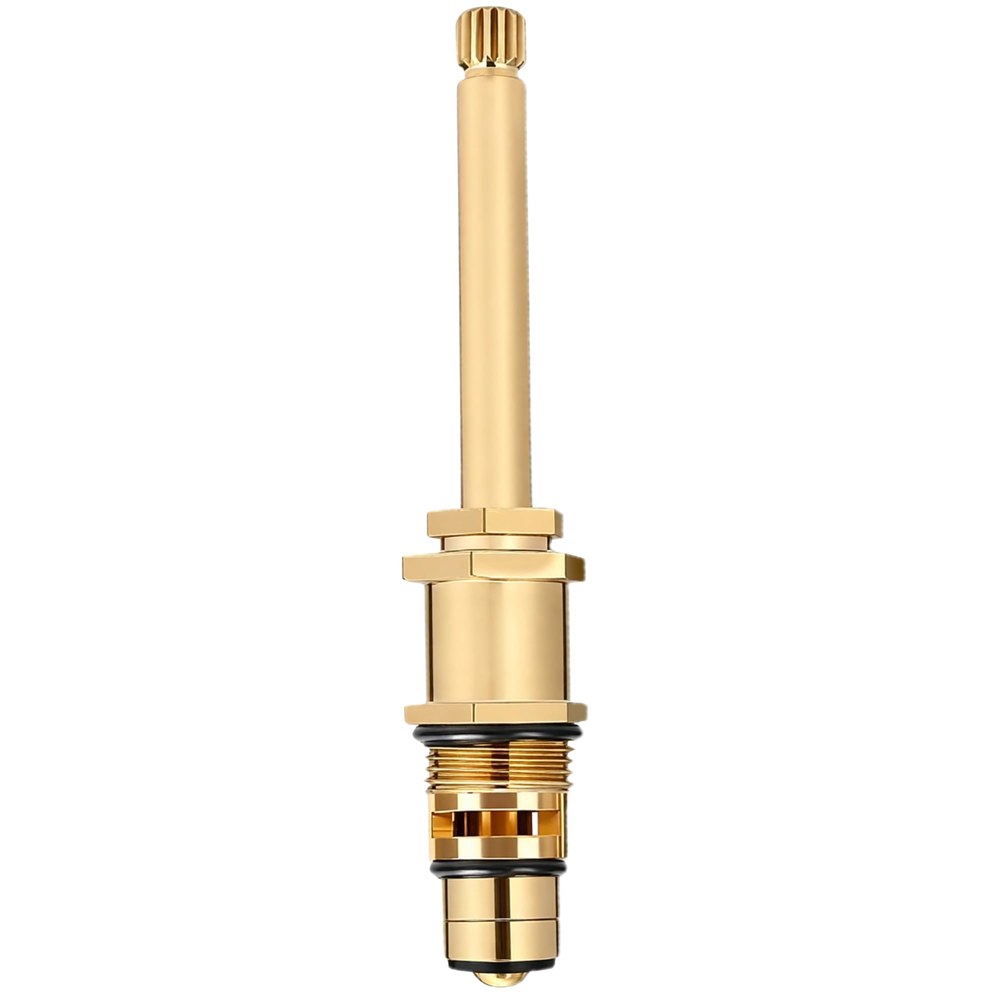
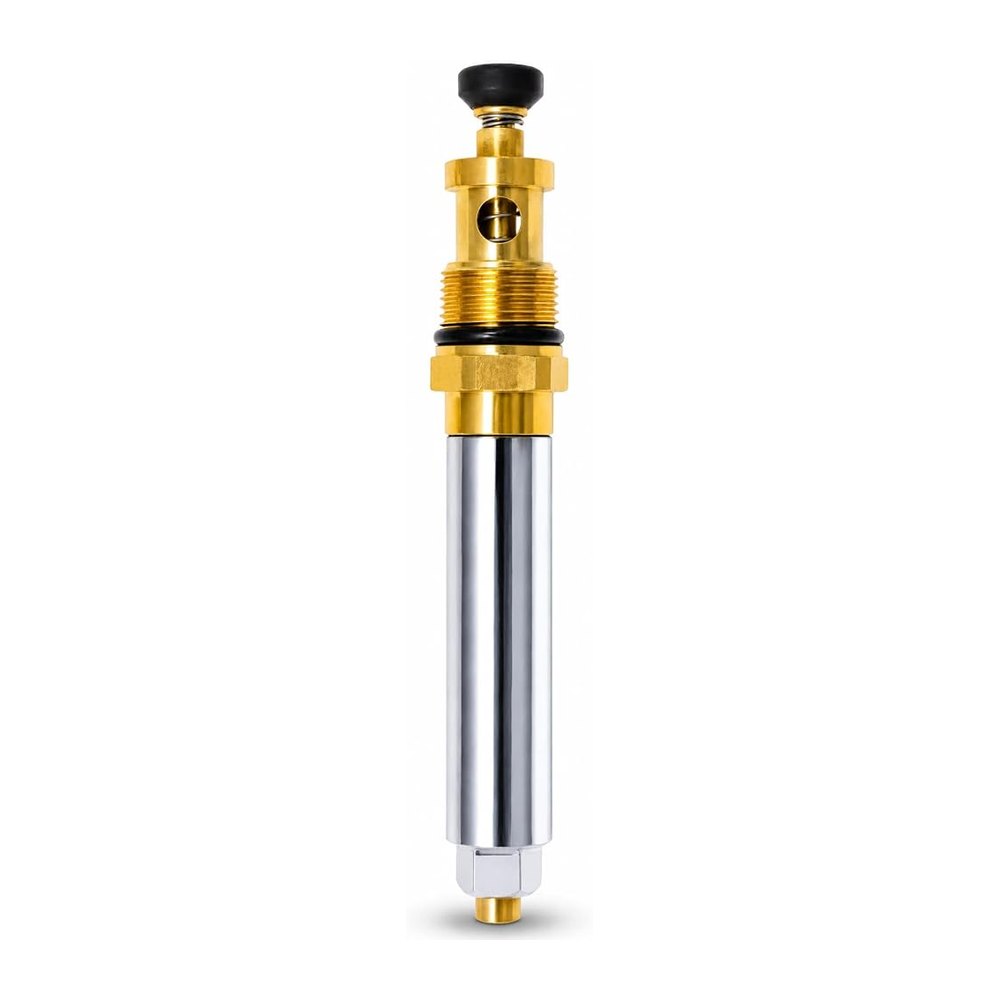
Not sure which stem is in your wall? Our cartridge and stem identification guide walks through measuring and counting, and the stem and cartridge finder matches the numbers to a part.
When to stop and call a plumber
- Water still comes from the pipe and the showerhead with the spout off the wall. That is the piping, not the diverter.
- The spout will not come off after the caulk is cut and the set screw is out.
- The problem started right after plumbing work in the house.
- A new stem and a new seat did not stop the spout. The valve body may be worn.
- Your diverter is inside a single-handle valve and the maker's sheet is not something you want to follow on your own.
Frequently asked questions
Why does water come out of the tub spout when the shower is on?
Because the diverter is not closing. The diverter is the part that sends water up to the showerhead instead of out the spout. Roto-Rooter puts it plainly: if you get water out of a tub spout when the shower is running, something is wrong with the diverter. The fix depends on where your diverter is: on the spout itself, behind the center handle of a three-handle faucet, or inside a single-handle valve.
Is a little water from the tub spout during a shower normal?
A few drops are common on a worn spout diverter, but a steady stream is a leak. In a New York State study of about 130 homes, 34 percent of diverters leaked more than 0.1 gallon per minute, and the average leak above that line was 0.8 gallon per minute. The same study says to accept a new spout only if it leaks less than 0.02 gallon per minute, which is a good target for yours.
How do I know if my tub spout is slip-fit or threaded?
Look under the spout near the wall for a small hole. Moen says if you see a screw there, it is a slip-fit spout, held on by a set screw that takes a 5/32 in. hex wrench. If there is no screw, it is a threaded spout that unscrews counterclockwise.
I replaced the diverter stem and water still comes out of the spout. Why?
Look at the seat the stem closes against. On a three-handle valve the diverter stem seals against a brass seat or a bore inside the valve body, and a pitted seat or a worn bore keeps sending water to the spout even with a new stem. The replacement for the Kohler 20868 ships with a new brass seat so you can renew it at the same time. If the seat and stem are both new and water still runs from the spout, have a plumber check the valve body and the piping.
Can I just leave it?
You can, but you pay for it twice: once for the water, and once for the energy that heated it. The New York State study worked an example for a 1.1 gallon per minute leak with a 10 minute shower each day: about 419 kilowatt hours a year of recoverable energy with electric water heating, or about 16.9 therms with gas, after a 0.7 savings factor. A spout or a diverter stem costs less than that.
Sources
Every step above comes from these pages. We opened each one on October 7, 2026.
- Roto-Rooter, Frequently asked questions: faucets: water from the spout with the shower running means the diverter; flush debris, vinegar for scale, shut the water off before opening a handle or push-button diverter.
- New York State Energy Research and Development Authority, Leaking Shower Diverters (PDF): the survey of about 130 homes, the bucket test, the 0.02 gallon per minute target, the energy example, the stuck spout caution.
- Globe Union, What do I do if my diverter on the tub spout no longer diverts water?: plumbing work first, the spout-off test, pipe length, replace the spout assembly.
- Moen Solutions, Replacing a Tub Spout: threaded versus slip-fit, the screw hole test, the 5/32 in. hex wrench, how each comes off.
- Hunker, How to Remove a Moen Tub Spout: the set screw and the drain, cutting caulk, not nicking the pipe.
- FourHome part pages: Pfister 910-382 diverter stem, Sayco 06550 diverter stem and Kohler 20868 diverter stem: lengths, broach counts, seats, box contents and install steps.
FourHome replacement stems, seats, cartridges and drains for Pfister, Sayco, Kohler, Moen, Delta, Gerber and more, shipped from Amazon fulfillment centers with Prime delivery.
See the full FourHome assortment on AmazonFourHome is an independent brand and is not affiliated with Pfister, Sayco, Kohler Co., Moen Incorporated, Globe Union, Roto-Rooter, Hunker or NYSERDA. Brand names and model numbers are used only to identify compatibility and to credit our sources. Shut the water off before opening any valve, follow the sheet that came with your faucet or spout, and call a licensed plumber if a part will not move or you are not sure of a step.
FourHome is not affiliated with or endorsed by any faucet manufacturer. Brand names and part numbers are used only to identify compatibility.