Shower Not Getting Hot Enough in Winter? 5 Causes and the Fix for Each
Every fall it happens in a lot of homes. The shower that was perfect in August now tops out at lukewarm, and you are standing there with the handle turned all the way over, waiting for heat that never comes.
Most of the time nothing is broken. The water coming into your house gets colder as the weather turns, and your shower valve is still set up for summer. Here is how to tell what is going on, starting with the fixes that cost nothing.
First, a 30-second test
Run the kitchen faucet on full hot. If the kitchen is hot and only the shower is weak, the problem is at the shower valve. If every faucet in the house is lukewarm, skip ahead to the water heater. If you would rather be walked through it, our sister site Vent, Valve & Volt has a four-question troubleshooter for a shower that will not get hot.
| What you notice | Most likely cause | Start with |
|---|---|---|
| Every faucet in the house runs lukewarm | Water heater | Cause 2 |
| Kitchen is hot, this shower is only warm, handle turns all the way | Limit stop set too low for winter | Cause 1 |
| Started right after someone worked on the valve | Inlet stop left partly closed, or cartridge turned the wrong way | Causes 3 and 4 |
| Hot at first, then fades after a few minutes | Water heater running out | Cause 2 |
| Stiff handle, swings on a flush, or drips when off | Worn or scaled cartridge | Cause 5 |
Cause 1: The limit stop was set for summer water
Most single-handle shower valves have an anti-scald limit stop, a small toothed ring or disc behind the handle that sets how far the handle can turn toward hot. It is there to protect people from scalding, and it is usually set once, often in warm weather, then forgotten.
In winter the cold supply can be many degrees colder than it was in summer. The valve mixes the same share of hot and cold, so the shower comes out cooler, and the limit stop keeps you from turning far enough to make up the difference. Delta's own installation instructions say the stop may need to be readjusted seasonally because winter inlet water is colder.
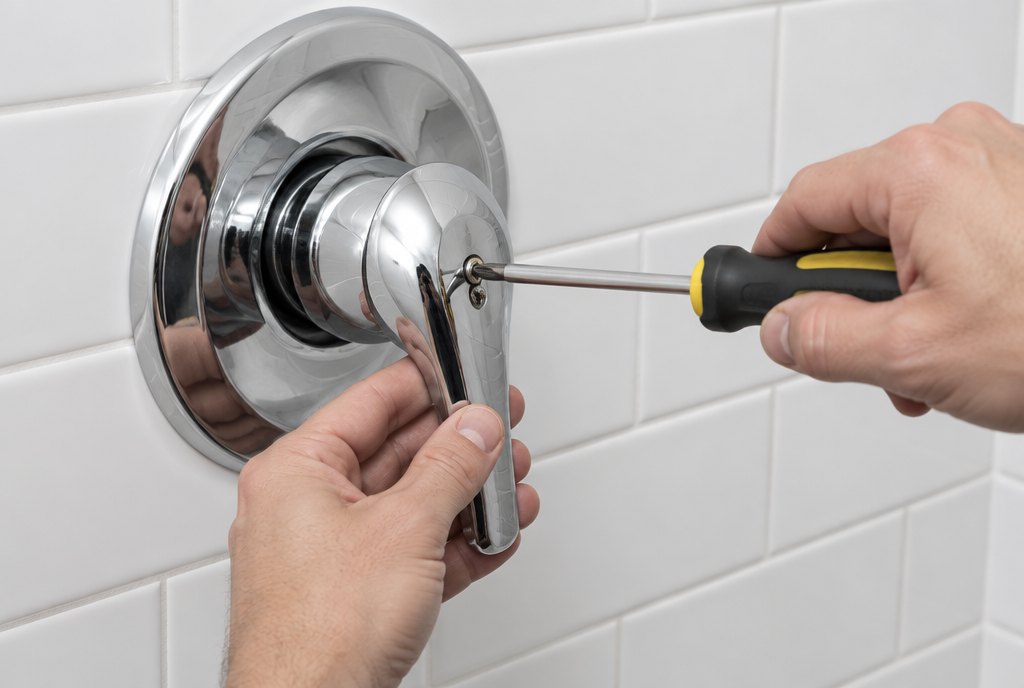
How to adjust it:
- Run the shower on full hot for a minute so the hot water reaches the valve.
- Remove the handle. Look for the limit stop on or around the cartridge stem. On many valves it lifts off, turns one tooth, and drops back on.
- Move it one notch toward hot. On Delta valves that is counterclockwise; check your valve's instructions for the direction.
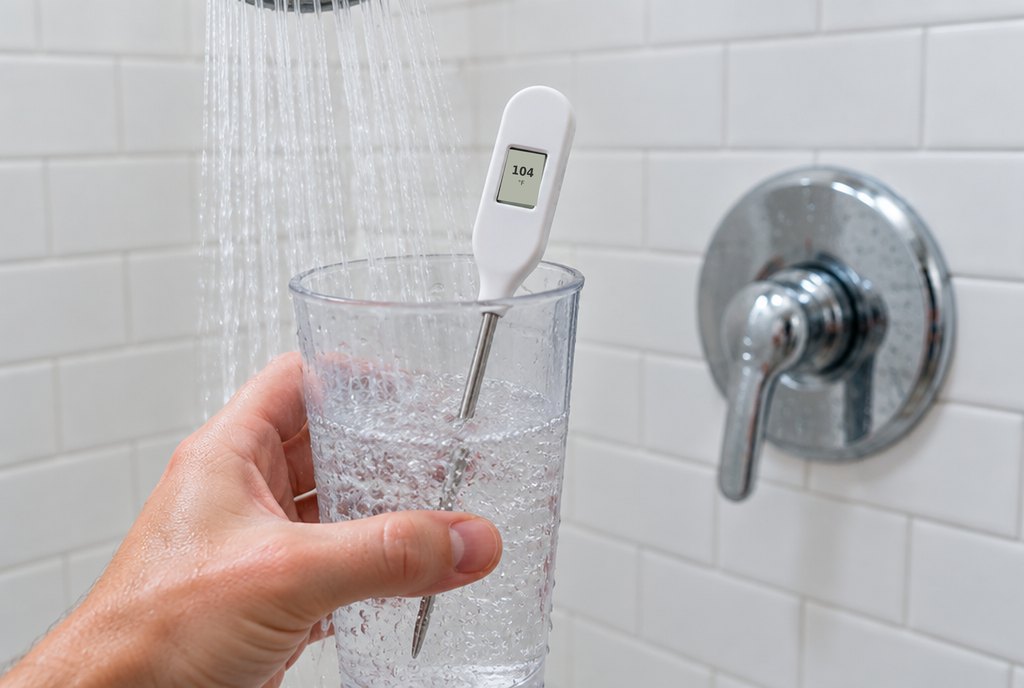
- Put the handle back on, turn it to full hot, and measure the water with a thermometer in a cup. Delta notes that one notch can change the temperature by 4 to 16 degrees F, so go one notch at a time.
- Stop at about 120 degrees F, or the limit your local code sets. Warmer is a scald risk, especially for kids and older guests.
Cause 2: The water heater is set low or running out
If no faucet in the house gets properly hot, look at the water heater. Around 120 degrees F is the usual recommended setting. A heater turned down over the summer, or one with a dial bumped lower, will feel it first in winter.
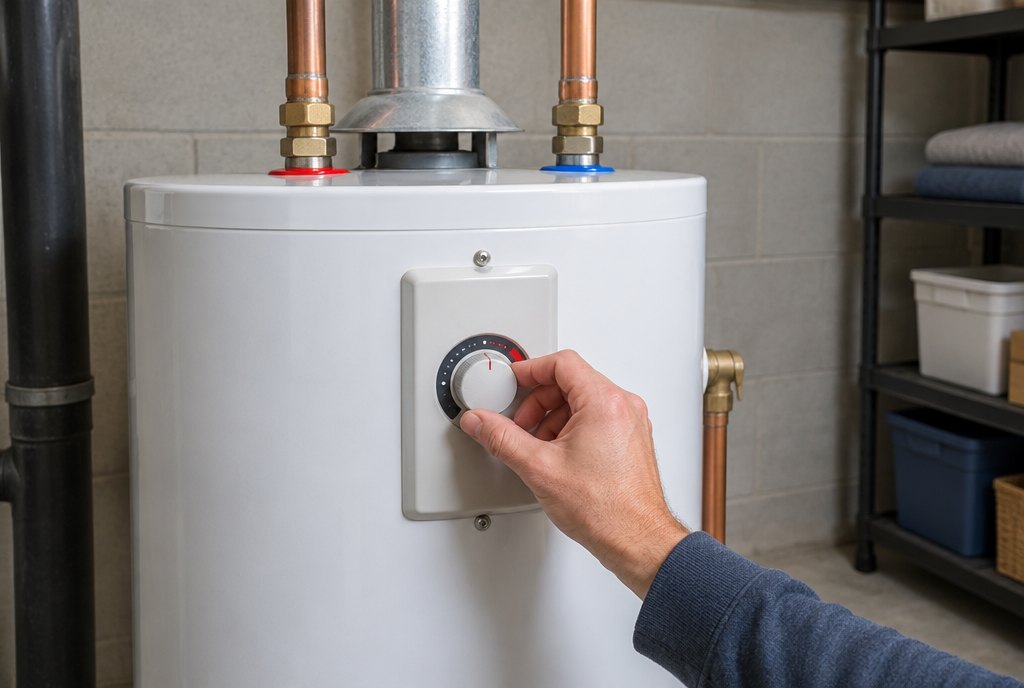
Winter also makes the tank work harder. It is heating colder water, so it recovers more slowly, and with extra people in the house for the holidays, back-to-back showers can empty it. If the shower starts hot and fades after a few minutes, that is the pattern. Space showers out, run the dishwasher and laundry at other times, and follow your heater's manual on flushing sediment, which takes up space in the tank over the years. For gas burner or electric element problems, call a pro.
Cause 3: An inlet stop was left partly closed
Some shower valves have small built-in shutoff stops on the hot and cold inlets, reached behind the trim plate with a screwdriver. They are used to shut the water off during a repair. If one was not opened all the way afterward, the hot side is starved and the shower never gets hot. Open both fully and test again.
Cause 4: The cartridge went back in turned the wrong way
If the problem started right after the cartridge was replaced, check its orientation. On many single-handle valves, a cartridge installed turned the wrong way reverses hot and cold, and the limit stop then caps the handle in the cold range. Pull it and reinstall it the way the instructions show.
Cause 5: The cartridge is worn or clogged with scale
A pressure balance cartridge has a small sliding part that evens out hot and cold pressure so the shower does not scald you when a toilet flushes. Over years, mineral scale and wear can make it stick, and when it sticks toward the cold side the shower never gets fully hot, no matter where the limit stop is.
Signs it is the cartridge and not the settings:
- The shower is weak or lukewarm but the tub spout or sink on the same line is fine
- The handle feels stiff or gritty
- The temperature jumps when someone flushes or runs the dishwasher
- The shower drips after it is turned off
Replacing the cartridge is usually a 30 to 60 minute job with the water shut off, and it fixes the heat, the swings and the drip at the same time. Find your valve brand below. Not sure what you have? Try the stem and cartridge finder.
Moen single-handle tub and shower
Many Moen single-handle shower valves use the 1222 cartridge. Our replacement for the Moen 1222 includes a removal tool, which helps with a cartridge that has been in the wall for years. Full steps are in the Moen 1222 replacement guide.

Delta single-handle tub and shower
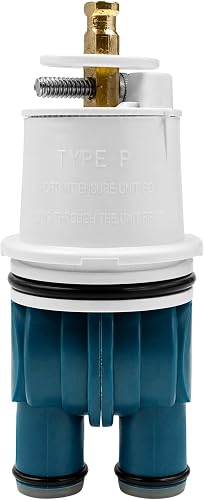
Delta valves take one of two cartridges. Pull the handle and look at the cap: white is the RP19804 for the 1300/1400 series, grey is the RP46074 for the 13/14 series. The RP46074 has the limit stop built in, so set it with a thermometer after you install it. The Delta cartridge and stem ID guide shows the difference.

Kohler and Sterling single-handle tub and shower
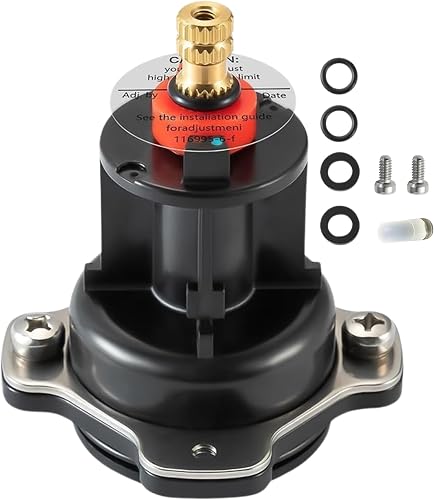
On Kohler K-304 and K-11748 style valves, the balancing cartridge sits under a mixer cap. If the cap and stem are in good shape, the GP500520 cartridge alone does the job. If the cap is worn too, the GP876851 kit replaces the cap and the cartridge together.

Gerber single-lever tub and shower
Gerber 49-400 and 49-700 series single-lever valves use a four-piece pressure balance kit, the replacement for Gerber 97-022 and 97-014.

And if it also drips after you turn it off
A shower that runs lukewarm and drips when it is off is telling you the same thing twice: the cartridge seals are worn. One new cartridge fixes both. See signs your shower cartridge needs replacing, or Delta shower faucet dripping for a Delta walkthrough.
The ten-minute check
- Run the kitchen tap hot. If it is lukewarm too, go to the water heater.
- Turn the shower handle all the way to hot and hold a thermometer in the stream.
- Pull the handle and look for the limit stop. Move it one notch toward hot and test again.
- If the valve has inlet stops behind the trim, make sure both are fully open.
- Still weak, stiff, swinging or dripping? Note the brand and replace the cartridge.
Start with the free fixes. If the shower still will not get hot, order the cartridge that matches your valve and it is a one-evening repair.
Replacement shower cartridges, stems and repair kits for the valves already in your walls, shipped from Amazon fulfillment centers with Prime delivery.
See the full FourHome assortment on AmazonFourHome is an independent brand and is not affiliated with Moen, Delta, Kohler, Sterling or Gerber. Brand names and part numbers are used only to identify compatibility. Keep shower water at or below 120 degrees F or your local code limit. For gas or electrical water heater service, or a leak inside a wall, call a licensed plumber.
Frequently asked questions
Why is my shower not hot in winter when it was fine in summer?
The cold water coming into your house is colder in winter, so the same handle position mixes to a cooler shower. If the valve has an anti-scald limit stop that was set in warmer months, it can now stop the handle before the water gets hot enough. Delta's own instructions note the stop may need to be readjusted seasonally for this reason.
How hot should my shower water be?
Most water heaters are set around 120 degrees F, and many plumbing codes limit the shower to about that. When you adjust a limit stop, check the water with a thermometer and keep it at or below 120 degrees F, or the limit your local code sets, especially with young children or older guests in the house.
Why does my shower start hot and then go lukewarm?
That is usually the water heater running out. In winter the tank has to heat colder water, so it recovers more slowly, and a house full of guests taking back-to-back showers can empty it. Space out showers, or have the heater checked if it happens with light use.
When should I call a plumber?
Call a licensed plumber if no faucet in the house gets hot and the water heater is not working, if gas or electrical parts of the heater need service, or if the valve body behind the wall is cracked or corroded. Adjusting a limit stop and replacing a shower cartridge are common do-it-yourself jobs.
FourHome is not affiliated with or endorsed by any faucet manufacturer. Brand names and part numbers are used only to identify compatibility.