Two-Handle Faucet Leaking From the Spout? Find the Side, Then the Fix
Both handles are off, and the spout still drips. On a two-handle faucet that usually means one of the two valves under the handles has stopped sealing. You do not need to rebuild both sides or replace the faucet to find out which. Two quick checks tell you the side and the kind of valve, and then you replace only the part that is worn.
This guide covers two-handle bathroom and kitchen sink faucets. If the water comes from around a handle while the faucet is running, that is a different leak: Bob Vila and This Old House both point to the O-ring for leaks around a handle. If your faucet has a single handle, Moen notes it has one cartridge where a two-handle faucet has two.
You will use the shutoff valves under the sink for the test below and for the repair. Moen says to rotate the shutoffs clockwise until they are tightly closed, then open the faucet handles to make sure the water is completely off. Old shutoffs can be the weak point: Roto-Rooter says a shutoff can be stuck from corrosion or stripped inside, that one that is hard to turn may be failing, and that a valve left off for a long time often starts dripping when it is turned back on. This Old House cautions not to over-torque on old work, so do not force a shutoff that will not turn. Hunker says that if there are no shutoffs, or they are old and stuck, you can turn off the main valve instead.
Step 1: Find the leaking side
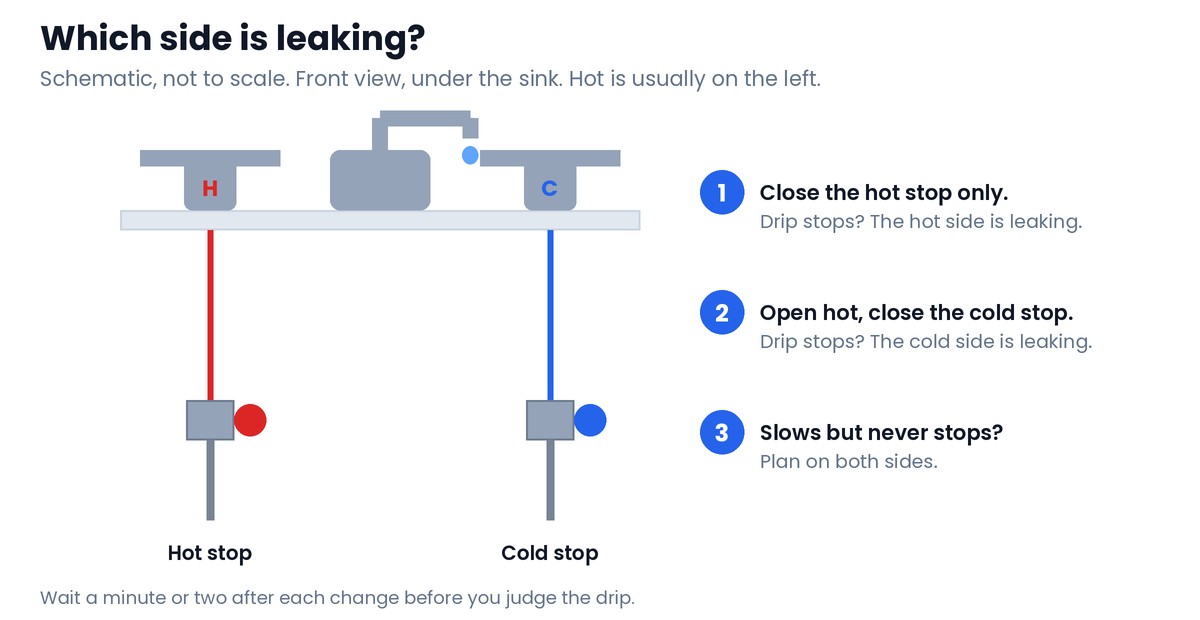
Close the hot shutoff only, then watch the spout. Danco sets out the test this way: if the water stops dripping when you turn off the hot valve, replace the hot stem, which is the left handle. If it is still dripping, replace the cold stem, the right handle. Pfister runs the test from the cold side first, then the hot, and says that if neither shutoff stops the leak, you may need to replace both. Give it a minute or two after each change. If a shutoff does not close all the way, the test can point at the wrong side: Roto-Rooter lists a shutoff that is closed while water still runs as a sign the valve is failing. Kohler notes that dirt or debris in the aerator, the screen at the end of the spout, can cause a drip that lasts a minute or two after the faucet is turned off, and that is not the leak you are chasing.
Step 2: Work out which kind of valve you have
Shut off the water, take the handle off the leaking side, and remove the stem or cartridge under it. What you find tells you the repair. Pfister says some cartridges have springs at the bottom that may have come loose, so make sure you take out every piece. The Home Depot says to take the old cartridge or stem you are replacing to the store, if you are not sure what you need.
| What you find | What it is | Go to |
|---|---|---|
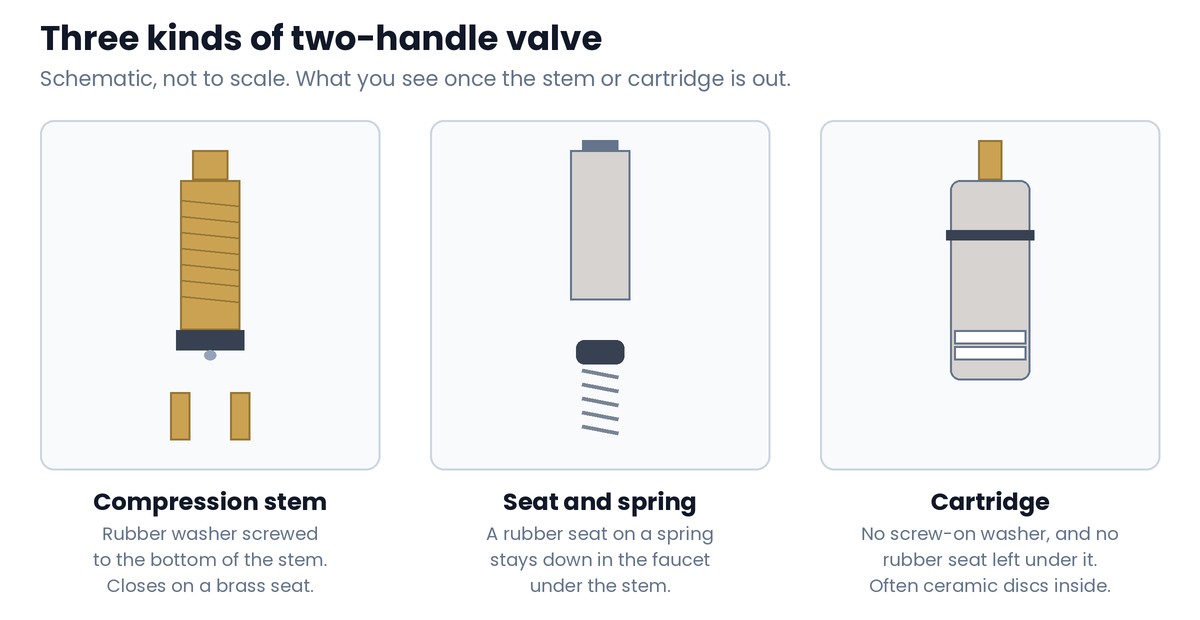
| A rubber washer held to the bottom of the stem by a screw, and a brass seat down in the faucet | A compression stem | Fix A |
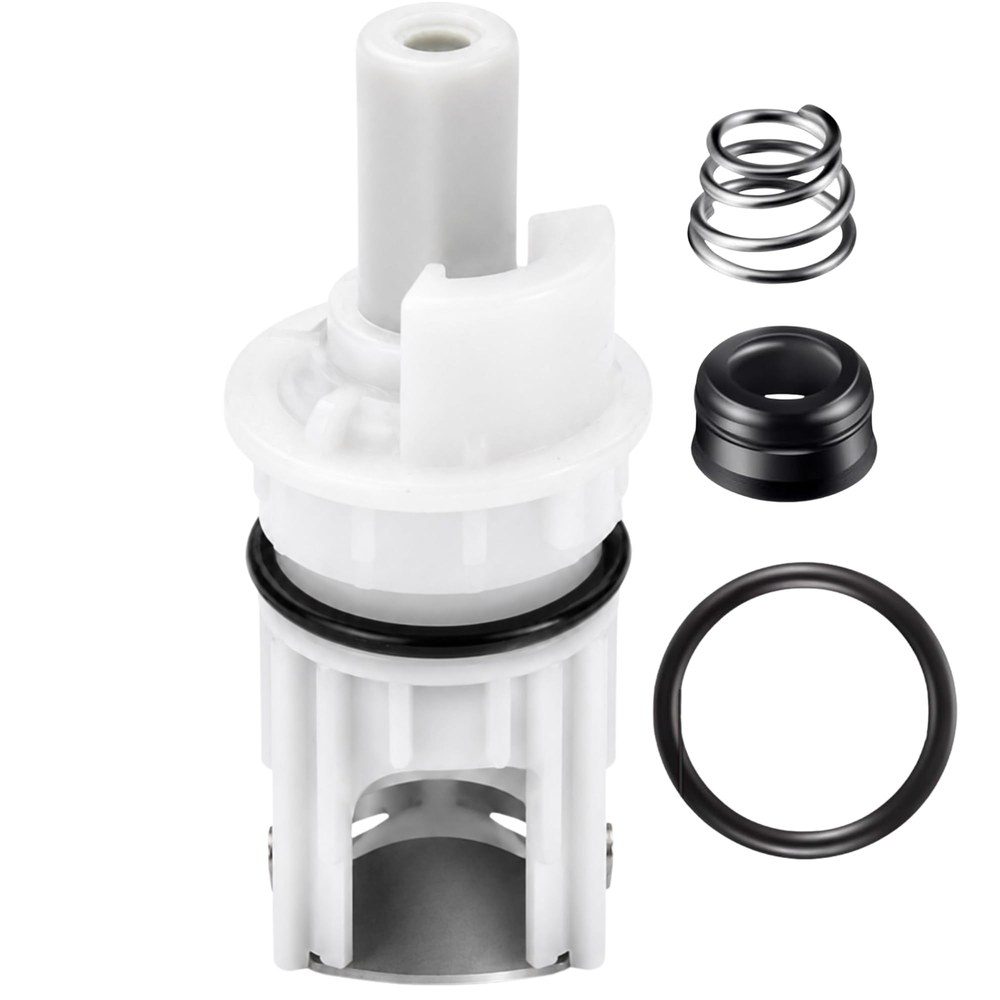
| A small rubber seat sitting on a spring down in the faucet body, under the stem | Delta style seats and springs | Fix B |
| A cartridge with no washer screwed to its end, and no rubber seat left in the faucet under it | A washerless cartridge, often ceramic disc | Fix C |
Fix A: compression stem, replace the washer and check the seat
Bob Vila describes a compression faucet as one that holds back the water with a small rubber washer that tightens in the valve seat, and This Old House says most leaky compression faucets need new seat washers. This Old House unscrews the old washer from the bottom end of the stem and installs a new one. Bob Vila says to check whether a screw holds the washer before you try to remove it, and a 1936 USDA plumbing bulletin warns that the head of that old screw often splits because it is already corroded, so take it slowly. Our sister site explains how a compression faucet works, part by part.
If the new washer does not stop the drip, look at the seat. This Old House says that if your faucet continues to leak, the seat may be pitted: sand it smooth with emery cloth, or replace it with a new one if you cannot repair it. Danco suggests a washer kit together with a new faucet seat when the old washer is squeezed flat or has a worn groove. Our faucet seat guide shows how to take the old seat out with a seat wrench, measure it and fit a new one.
Fix B: Delta seats and springs, then the stem
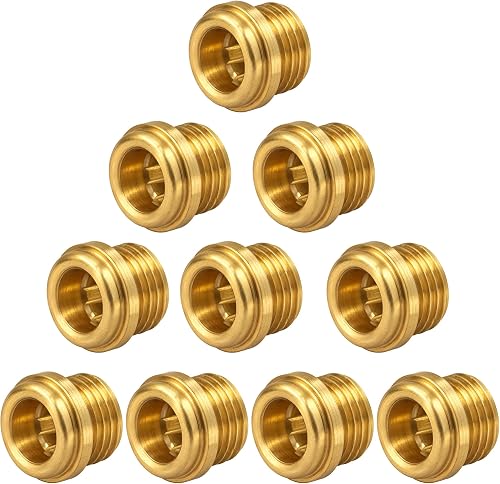
Delta says that with normal wear, the seats and springs in its two-handle faucets wear out, which may result in a leak from the spout. Its fix comes in two stages: replace the seats and springs first, and if the problem continues, replace both stem assemblies. Delta's two stem options are RP1740 and RP25513, the latter for faucets with the quarter turn stop, so match the stem you pulled out. When the new stem goes in, Delta says to line up its tabs with the slots in the body, and to rotate the stem 180 degrees if the handle turns the wrong way. Our kitchen faucet drip guide walks through the seats and springs and the stem step by step, and the same steps apply to a Delta two-handle bathroom faucet.


Fix C: washerless cartridge, replace it
Moen says that if a faucet is leaking water from the spout, the reason is usually the cartridge, and Kohler says replacing the valve or cartridge under the handle should resolve a constant leak from the spout. Match the new cartridge to the old one and to its side. Kohler says its hot and cold ceramic valves differ only in the way they turn, and that its UltraGlide valves are not reversible. Pfister says the hot and cold are sometimes different cartridges because they turn in different directions, and asks you to double check that each one goes on the correct side, with cold on the right and hot on the left. Glacier Bay's guide for one two-handle faucet lists separate hot and cold ceramic disc cartridges.


Putting it back together
- Grease. Hunker says to use a silicone-based faucet grease on faucet parts, because a substitute containing petroleum can react with rubber seals and O-rings.
- Snug, not tight. This Old House says to avoid overtightening screws and nuts, and Pfister warns that overtightening can crack a cartridge. Makers give different numbers for how far past hand tight to go, so follow the sheet for your faucet.
- Water on slowly. This Old House warns that the force of the returning water can fracture a ceramic disk, so open the shutoffs gradually. Follow your faucet sheet on handle position: This Old House moves the handle to on first, while Pfister sets it to off.
- Test. Kohler turns the water back on to check for leaks before the handle goes back on. Check the spout with both handles off, then check around each handle with the water running.
If it still drips
| What you see | Next step |
|---|---|
| New washer, still drips | Check the seat: dress it or replace it (Fix A) |
| New Delta seats and springs, still drips | Replace both stem assemblies, as Delta says (Fix B) |
| One side fixed, the drip only slowed | Repeat the shutoff test: the other side may be leaking too |
| A handle turns the wrong way after the repair | The stem or cartridge is on the wrong side or turned 180 degrees |
| Water around a handle while the faucet runs | A different leak: an O-ring, or on a Moen faucet usually the cartridge |
When to stop and call a plumber
- A shutoff under the sink will not close, or leaks once you turn it. Roto-Rooter says a shutoff that leaks is probably failing, and Family Handyman says that if tightening its packing nut does not stop the leak, the whole valve needs replacing.
- The faucet body is corroded. Mr. Rooter Plumbing says that once corrosion spreads inside the faucet body, repairs become temporary fixes at best.
- The drip keeps coming back after you have replaced the washers. Mr. Rooter Plumbing says the internal valve or cartridge may then be damaged beyond simple repair.
- A stem or cartridge will not come out with ordinary force. Forcing it can crack the faucet, which is our own caution.
Frequently asked questions
Why does my two-handle faucet drip from the spout when both handles are off?
One of the two valves under the handles is no longer sealing. Kohler describes a constant leak from the end of the spout as a sign that the valve or cartridge under the handle has worn out. In an older compression faucet the worn part is usually the rubber washer or the brass seat it closes on; in a Delta two-handle faucet it can be the rubber seats and springs; in a cartridge faucet it is usually the cartridge, as Moen says.
How do I tell which side is leaking?
Close the hot shutoff under the sink and watch the drip. Danco says that if the drip stops, replace the hot stem, the left handle; if it keeps dripping, the cold stem, the right handle, is the one to replace. Pfister runs the test from the cold side first, then the hot, and adds that if neither shutoff stops it, you may need to replace both.
Are the hot and cold cartridges the same?
Not always. Kohler says the only difference between its hot and cold ceramic valves is the way they turn, and that its UltraGlide valves are not reversible. Pfister says hot and cold are sometimes different cartridges because they turn in different directions. Match the part to the side it came from, and take the old one with you when you buy.
Why does it still drip after I put in a new washer?
The seat under the washer may be pitted. This Old House says that if the faucet continues to leak, the seat may be pitted, and that you can smooth it with emery cloth or replace it if it cannot be repaired. The other side of the faucet may be leaking too, so repeat the shutoff test.
What grease should I use on faucet O-rings?
Hunker says to use a silicone-based faucet grease, and warns that a substitute containing petroleum can react with rubber seals and O-rings, causing them to dry out. This Old House coats washers with nontoxic, heat-proof plumber's grease.
Sources
The steps above come from these pages, except where a step says the advice is our own. We opened each one on October 12, 2026.
- Delta, What do I do about water dripping from the spout of my two-handle lavatory faucet?.
- Kohler, Leaking from End of Spout, Replace the Valve in a Two Handle Faucet and Change a Kohler Ceramic Valve Cartridge from Hot to Cold.
- Moen, Bathroom Faucet: Dripping From the Spout, Bathroom Faucet: Leaking Around the Handle and How to Turn Off the Water Supply to the Faucet.
- Pfister, Bathroom Faucet Leaking.
- Glacier Bay, two-handle lavatory faucet F51A0074 installation and care guide.
- Danco, How to Repair a Leaky Two-Handle Faucet.
- This Old House, How to Stop Kitchen Faucet Leaks.
- Bob Vila, How to Fix a Leaky Faucet.
- The Home Depot, How to Fix a Leaky Faucet.
- Hunker, How to Lubricate Single-Handle Faucets and Delta Kitchen Faucet Troubleshooting.
- Roto-Rooter, Three Common Problems with Supply Shutoff Valves.
- Family Handyman, How to Fix a Leaking Shutoff Valve.
- Mr. Rooter Plumbing, How to Tell If Your Faucet Needs Repair or Replacement.
- U.S. Department of Agriculture, Farmers' Bulletin 1460, Simple Plumbing Repairs in the Home (revised 1936).
Replacement stems, cartridges, seats and springs for Delta, Moen, Pfister, Glacier Bay and more, shipped from Amazon fulfillment centers with Prime delivery.
See the full FourHome assortment on AmazonFourHome is an independent brand and is not affiliated with Delta Faucet Company, Kohler Co., Moen Incorporated, Pfister, Glacier Bay, The Home Depot, Danco, This Old House, Bob Vila, Hunker, Roto-Rooter, Family Handyman or Mr. Rooter Plumbing. Brand names and part numbers are used only to identify parts or to cite their published instructions. Shut off the water before you work on a faucet, do not force a stuck part, and call a licensed plumber when a repair goes beyond a washer, a seat, a stem or a cartridge.
FourHome is not affiliated with or endorsed by any faucet manufacturer. Brand names and part numbers are used only to identify compatibility.