What Does NSF 372 Mean? Lead-Free Plumbing Certifications Explained
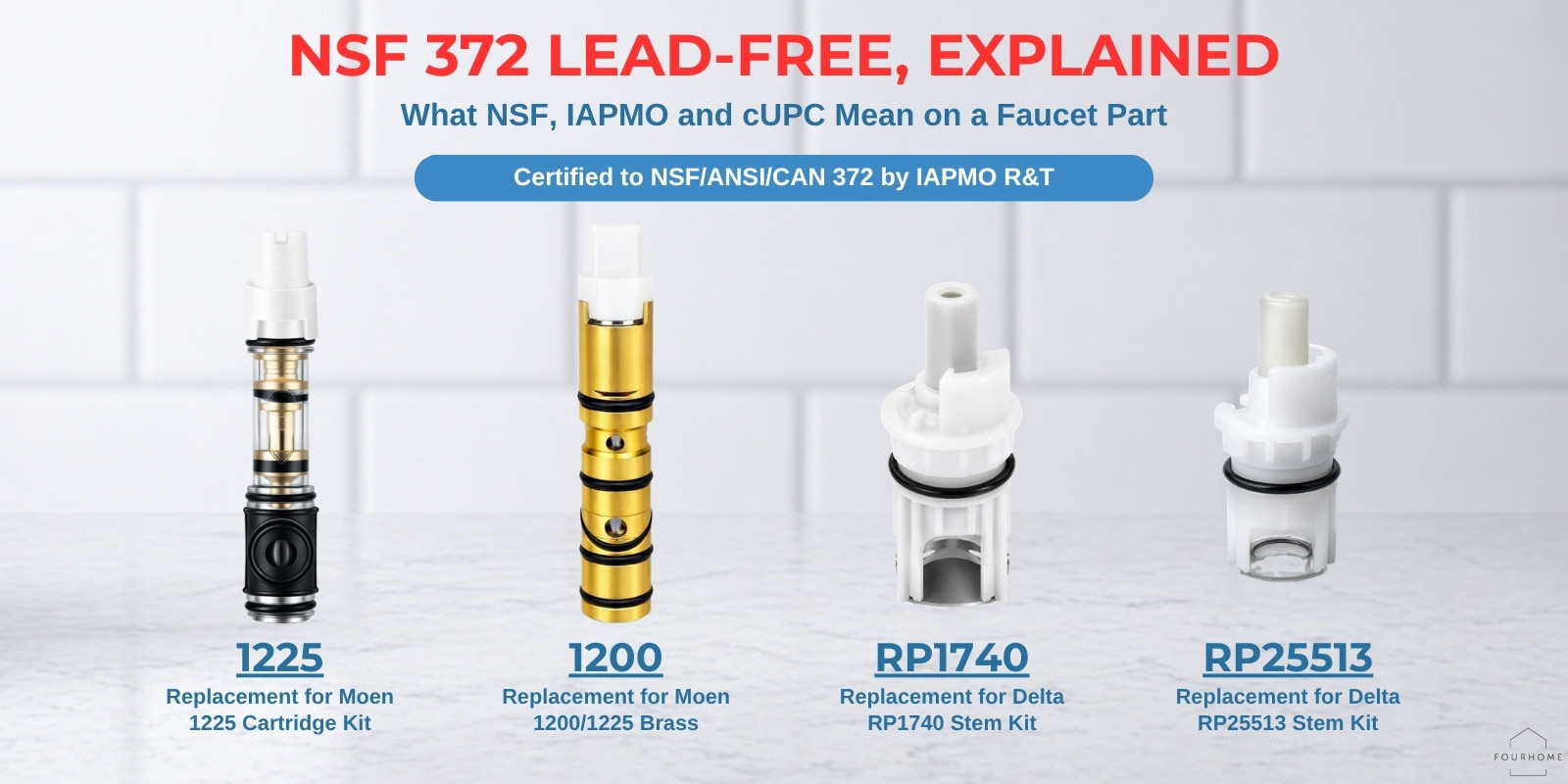
Look at the box of almost any faucet part and you will find a string of letters: NSF, ANSI, CAN, 61, 372, UPC, cUPC. They are not marketing. Each one points to a law, a test or a lab, and together they tell you whether a part is legal to put in a sink that people drink from. This guide explains what each one means, who is behind it, and how to check a part before you buy it.
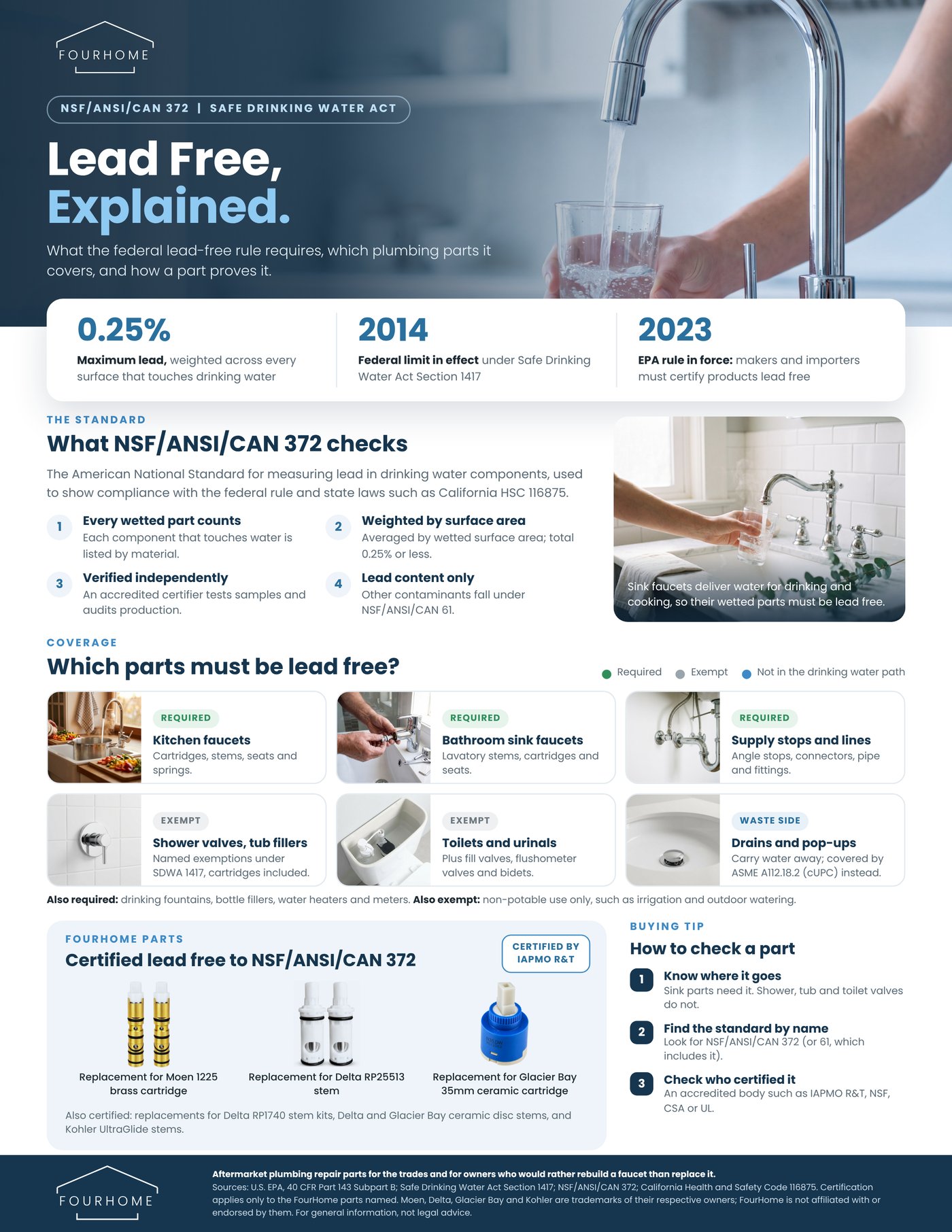
The short answer. NSF/ANSI/CAN 372 is the American National Standard for measuring lead in parts that carry drinking water. A part passes if the surfaces that touch water average 0.25% lead or less, weighted by surface area. Federal law has required that limit since January 4, 2014, and since September 1, 2023 the EPA has also required the part to be certified by an accredited third party.
Sink faucet cartridges, stems and seats need it. Shower valves, tub fillers and toilets are exempt. Drains carry water away, so they are covered by a different standard.
What does NSF stand for?
NSF started in 1944 as the National Sanitation Foundation, founded at the University of Michigan School of Public Health in Ann Arbor. Its first standards covered restaurant sanitation. Today the organization simply goes by NSF, and its drinking water standards are used across the United States and Canada.
NSF does two different jobs, and mixing them up causes most of the confusion:
- It writes standards. Committees of manufacturers, regulators and public health experts draft the test methods. NSF/ANSI/CAN 61 and NSF/ANSI/CAN 372 are two of them.
- It certifies products. NSF also runs a lab that tests products against those standards.
The two are separate. A part does not have to be tested by NSF to be certified to an NSF standard. Any certifier accredited for that standard can do the testing, which is why you will see NSF 372 printed next to other labs' marks.
What the letters in NSF/ANSI/CAN 372 mean
| Part of the name | What it means |
|---|---|
| NSF | NSF developed and maintains the standard. |
| ANSI | The American National Standards Institute approved it as an American National Standard. ANSI does not test products. It oversees how US standards are written and accredits the bodies that write and certify to them. |
| CAN | It is also a National Standard of Canada, approved through the Standards Council of Canada (SCC). One standard works on both sides of the border. |
| 372 | The standard's number. 372 covers lead content. 61 covers health effects of drinking water components. |
NSF 372 vs NSF 61
These two are easy to confuse because both deal with lead. They measure different things.
| NSF/ANSI/CAN 372 | NSF/ANSI/CAN 61 | |
|---|---|---|
| What it checks | How much lead is in the part | What leaches out of the part into the water |
| How | Material review: every wetted component, its lead content and its wetted surface area | Exposure testing: water sits in the product, then is analyzed |
| Contaminants | Lead only | Lead plus other metals and chemicals |
| Limit | 0.25% weighted average lead on wetted surfaces | Health-based limits for each contaminant |
| Meets the federal lead-free rule? | Yes | Yes, per the EPA |
Some older products are marked Annex G. That was the lead-content section inside NSF 61 before the requirement moved into its own standard, NSF 372, in 2010. The EPA notes that Annex G is retired but can still appear on older stock.
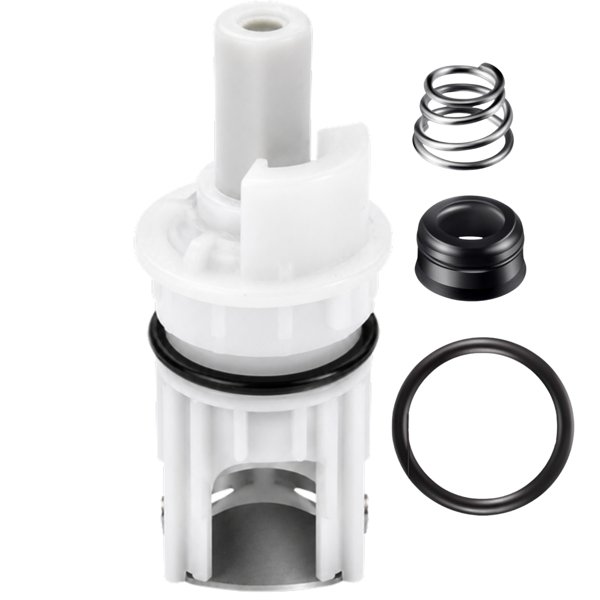
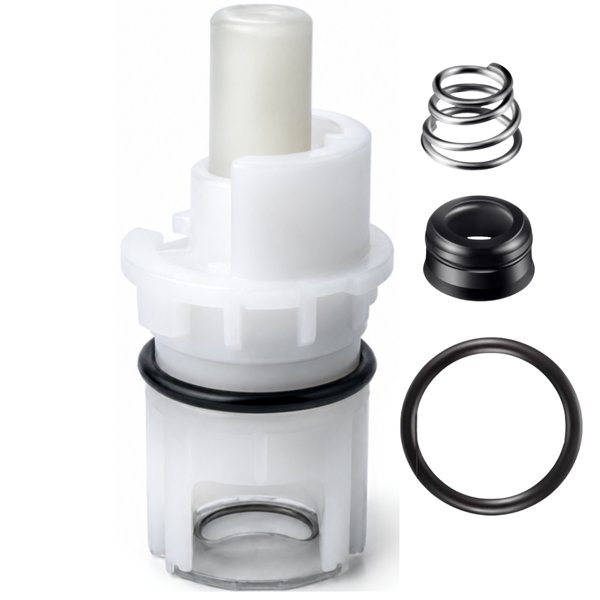
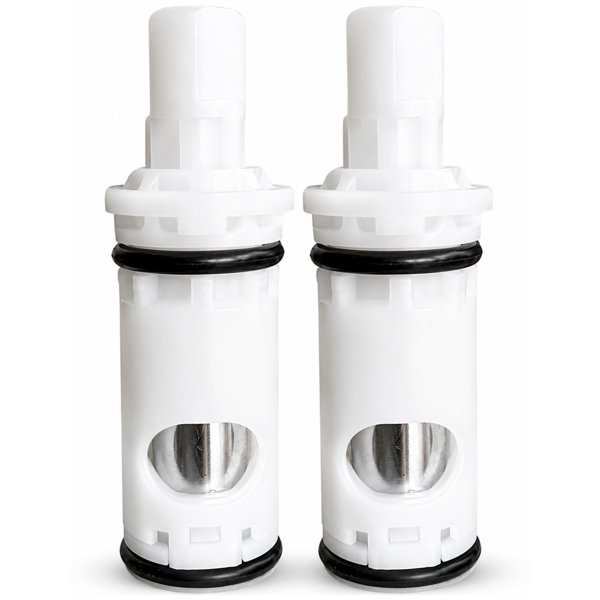
What a 372 review actually looks at is every piece that gets wet. On a two-handle stem kit that is the stem body, the seat and the spring, not just the housing. These two Delta-fit kits went through that review as complete kits:
Who is IAPMO?
IAPMO is the International Association of Plumbing and Mechanical Officials. It was founded in 1926 by a group of Los Angeles plumbing inspectors, and it publishes the Uniform Plumbing Code (UPC), first issued in 1945. The UPC is the plumbing code adopted by many western US states and cities, and it is used in other countries too.
IAPMO R&T (Research and Testing) is IAPMO's certification arm, operating since 1936. It is accredited by ANSI and the Standards Council of Canada, and it certifies plumbing products to standards written by others, including NSF/ANSI/CAN 372 and 61, ASME and CSA product standards.
- UPC mark: IAPMO R&T says the product meets the applicable US codes and standards.
- cUPC mark: the product meets the applicable US and Canadian codes and standards.
In plain terms: NSF wrote the lead test, and IAPMO R&T is one of the labs that runs it and puts its name behind the result.
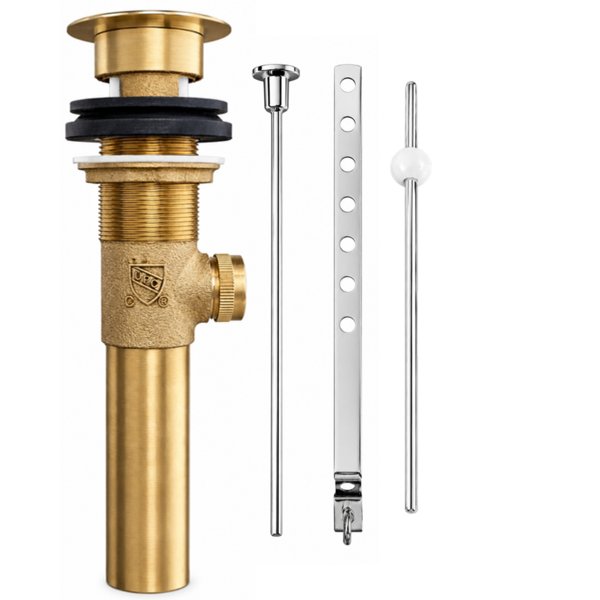
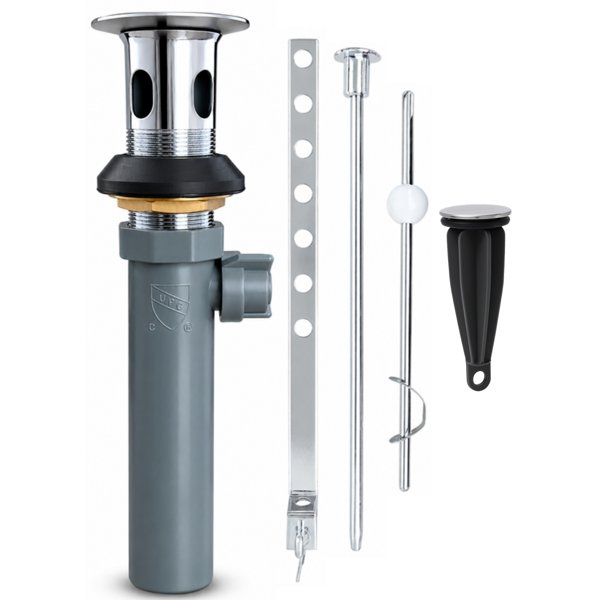
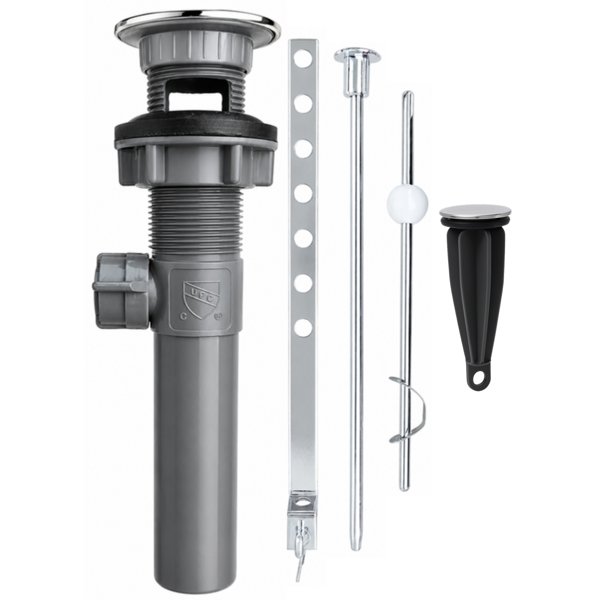
The cUPC mark is the one you will most often find cast right into the metal. On our pop-up drains it sits on the drain body, so an inspector can read it on the installed part:
Who writes the rule, who writes the test, who checks the part
Every certification you see sits in a chain. Knowing the chain is how you tell a real certification from a vague claim.
The certifiers the EPA lists
The EPA's own guide to identifying lead-free products names eight ANSI-accredited third-party certifiers. Any of them can certify a part to NSF/ANSI/CAN 372 or 61.
| Certifier | Who they are |
|---|---|
| IAPMO R&T | Certification arm of the association that publishes the Uniform Plumbing Code. UPC and cUPC marks. |
| NSF | Writes the 61 and 372 standards and also certifies to them. |
| CSA Group | Founded in Canada as the Canadian Standards Association. Writes the CSA B125 plumbing fitting standards and certifies products. |
| UL Solutions | Founded as Underwriters Laboratories. Known for electrical safety, also certifies plumbing and water quality products. |
| ICC-ES | The evaluation service of the International Code Council, which publishes the International Plumbing Code. PMG mark. |
| Intertek | Global testing company. Its plumbing marks include ETL and WH. |
| WQA | Water Quality Association. Gold Seal mark, mostly on water treatment products. |
| ALS Global | Testing and inspection company. |
A short history of the lead-free rule
- 1986: Amendments to the Safe Drinking Water Act ban lead in plumbing that carries drinking water, but "lead free" still allows up to 8% lead in pipes and fittings.
- 2010: California's limit of 0.25% weighted average lead takes effect (California Health and Safety Code 116875). NSF/ANSI 372 is published the same year to measure it.
- 2011: Congress passes the Reduction of Lead in Drinking Water Act, taking the 0.25% limit national.
- January 4, 2014: The national 0.25% limit takes effect under Safe Drinking Water Act Section 1417.
- September 1, 2023: The EPA rule at 40 CFR Part 143, Subpart B takes effect. Manufacturers and importers must have their products certified lead free, by an accredited third party in almost all cases.
Which parts must be lead free?
The rule covers pipes, fittings and fixtures used for water people drink or cook with. The question to ask is simple: does this part carry water someone might drink?
- Required: kitchen and bathroom sink faucets and every part inside them that touches water, including cartridges, stems, seats and springs. Also supply stops, supply lines, pipe and fittings, drinking fountains, bottle fillers, water heaters and meters.
- Exempt by name: shower valves, tub fillers, toilets, bidets, urinals, fill valves and flushometer valves. Also anything used only for non-drinking water, such as irrigation or industrial processes.
- Different standard: sink drains and pop-ups carry water away, not to the tap. They are certified to ASME A112.18.2 / CSA B125.2 for waste fittings, which is where a cUPC mark on a drain comes from.
The parts below are the "required" column in practice: single-handle sink cartridges that carry the water you drink, each certified to NSF/ANSI/CAN 372 by IAPMO R&T.
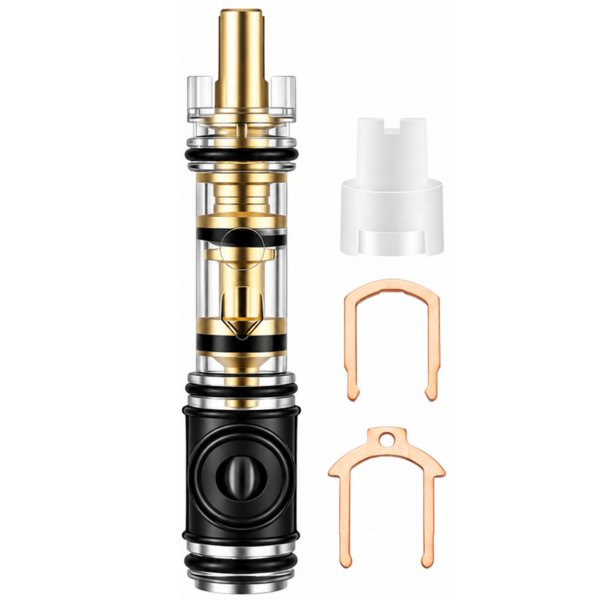
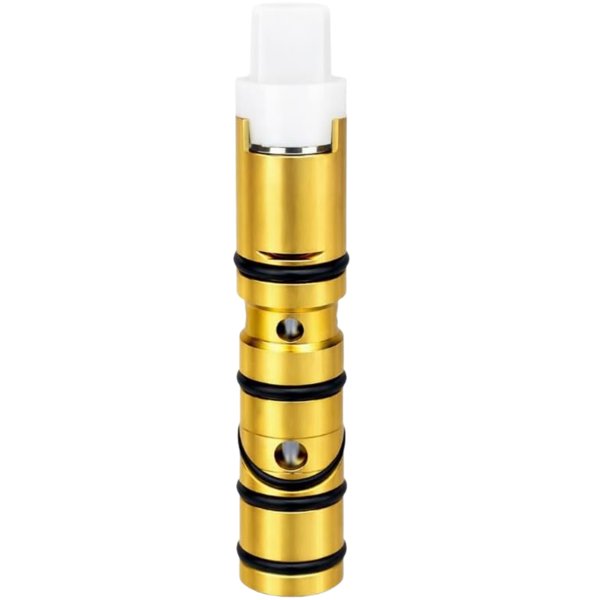
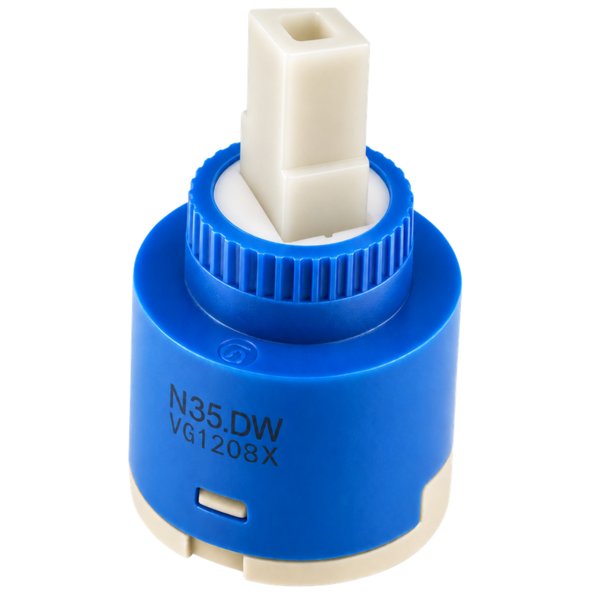
This is why you will not see FourHome claim "lead free" on a shower cartridge or a tub and shower stem. Federal law does not require it for those parts, and we only print a certification where a certificate backs it up. When a listing puts a lead-free claim on a shower valve cartridge with no standard or certifier named, treat it as marketing.
Other marks you will see on plumbing parts
| Mark or standard | What it covers |
|---|---|
| ASME A112.18.1 / CSA B125.1 | Performance and durability of plumbing supply fittings, such as faucets. The US and Canadian versions are harmonized. |
| ASME A112.18.2 / CSA B125.2 | Plumbing waste fittings, such as sink drains and pop-ups. |
| ASSE 1016 | Shower valves that limit temperature swings to prevent scalding, such as pressure-balance valves. |
| WaterSense | An EPA program for water efficiency, such as low-flow faucets and showerheads. It is not a lead or safety certification. |
| ISO 9001 | A factory's quality management system. It says nothing about lead content or code compliance for a specific product. |
How to check a part before you buy
- Know where it goes. Sink faucet parts need a lead-free certification. Shower, tub and toilet valves do not.
- Find the standard by name. Look for "NSF/ANSI/CAN 372" or "61" printed on the part, the box or the listing. "Lead free," "low lead" or "meets NSF" with no standard number is not a certification.
- Check who certified it. The standard should appear with an accredited certifier's name or mark, such as IAPMO R&T, NSF, CSA, UL, ICC-ES, Intertek or WQA.
- Verify it if it matters. For permitted work, ask the seller for the certificate. Certifiers publish searchable listings of the models they cover, including IAPMO's product listing directory and NSF's certified product listings.
Step 2 in practice: on a FourHome listing the standard is named in full, "NSF/ANSI/CAN 372," with the certifier, IAPMO R&T, next to it. Two-handle faucets need one certified stem per side, which is why these come as pairs or kits:
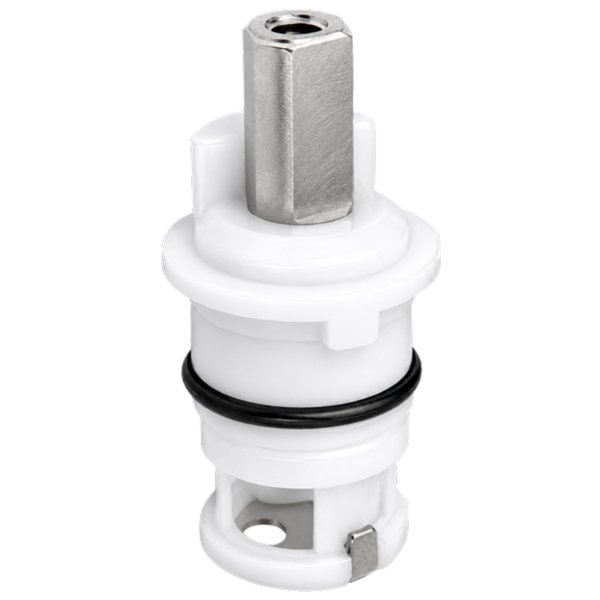
Most of the parts above also come in 2 packs for landlords and techs who keep a spare on the truck: Moen 1200/1225 brass 2 pack, Moen 1225 kit 2 pack, Delta RP1740 2 pack, Delta RP25513 2 pack and ceramic disc stem 2 pack. Not sure which cartridge you have? Start with Moen 1222 vs 1225 vs 1200 or How to Identify Your Delta Faucet Cartridge or Stem. For drain installs, see the pop-up drain guide.
Every FourHome part ships from Amazon fulfillment centers with Prime delivery, so a dripping faucet does not wait a week for the right cartridge. Cartridges, stems, seats, repair kits and drains, matched to the OEM part numbers.
See the full FourHome assortment on AmazonSources
U.S. EPA, 40 CFR Part 143 Subpart B, Use of Lead Free Pipes, Fittings, Fixtures, Solder, and Flux for Drinking Water (sections 143.12, 143.16, 143.19). U.S. EPA, How to Identify Lead-Free Certification Marks for Drinking Water System and Plumbing Products (June 2024). Safe Drinking Water Act Section 1417. California Health and Safety Code 116875. NSF, Our History. IAPMO, IAPMO History. IAPMO R&T, Canadian Plumbing Certification FAQs. NSF/ANSI/CAN 61 and NSF/ANSI/CAN 372.
Certification statements apply only to the FourHome parts named above. Moen, Delta, Glacier Bay and other brand names are trademarks of their owners and are used only to identify compatibility. This article is general information, not legal advice.
Frequently asked questions
What does NSF stand for?
NSF began in 1944 as the National Sanitation Foundation at the University of Michigan School of Public Health. Today the organization goes by NSF. It writes public health standards and also tests and certifies products.
What is the difference between NSF 61 and NSF 372?
NSF/ANSI/CAN 372 measures how much lead a part contains: no more than a 0.25% weighted average across the surfaces that touch water. NSF/ANSI/CAN 61 tests what leaches out of a product into the water, covering lead and other contaminants. The EPA says a product certified to either one meets the federal lead-free requirement.
Does a part have to be certified by NSF to be NSF 372 certified?
No. NSF writes the standard, but any certifier accredited for it can certify a product to it. The EPA lists ALS Global, CSA Group, IAPMO R&T, ICC-ES, Intertek, NSF, UL Solutions and WQA as accredited third-party certifiers.
Do shower cartridges have to be lead free?
Not under federal law. The Safe Drinking Water Act exempts shower valves, tub fillers, toilets, bidets, urinals, fill valves and flushometer valves, because people do not drink from them. Sink faucet parts are not exempt.
What does cUPC mean on a drain?
It is IAPMO R&T's mark. A UPC mark means the product meets the applicable US codes and standards. The small c means it also meets the Canadian ones. For a sink drain, the product standard is ASME A112.18.2 / CSA B125.2 for waste fittings.
Is ISO 9001 a product certification?
No. ISO 9001 certifies a factory's quality management system. It does not test any product for lead content or code compliance.
FourHome is not affiliated with or endorsed by any faucet manufacturer. Brand names and part numbers are used only to identify compatibility.